
Plant safety record
Ponytail Palm
Beaucarnea recurvata
Ponytail palm is considered non-toxic to cats and dogs. It is not a true palm: Beaucarnea recurvata is a drought-tolerant plant with a swollen base and long arching leaves. Correct identification still matters because Sago Palm is unrelated and dangerously toxic.


Cats
NON-TOXIC
A correctly identified ponytail palm is not expected to poison a cat. Chewing long fibrous leaves may still cause mild vomiting or loose stool.
Dogs
NON-TOXIC
A correctly identified ponytail palm is not expected to poison a dog. Watch for stomach upset after a large chewing episode.
Quick answer
For a small nibble from a correctly identified ponytail palm, remove the plant and watch your pet. Normal access to drinking water is appropriate.
Call your veterinarian if vomiting repeats, diarrhea is substantial, your pet seems weak, or the plant may actually be a sago palm or another look-alike.
Plant identity
Beaucarnea recurvata
What non-toxic means
Non-toxic means Beaucarnea recurvata is not expected to cause a characteristic poisoning syndrome in cats or dogs.
It does not make the long leaves food. Any fibrous plant material may cause mild stomach upset, especially when a large amount is swallowed.
If your pet chewed a leaf
Remove loose pieces and check that your pet is swallowing and breathing normally. Do not make your pet vomit or give a home remedy.
Observation is often enough when the pet remains comfortable. Persistent vomiting, diarrhea, choking concerns, or unusual behavior deserves a veterinary call.
How to recognize ponytail palm
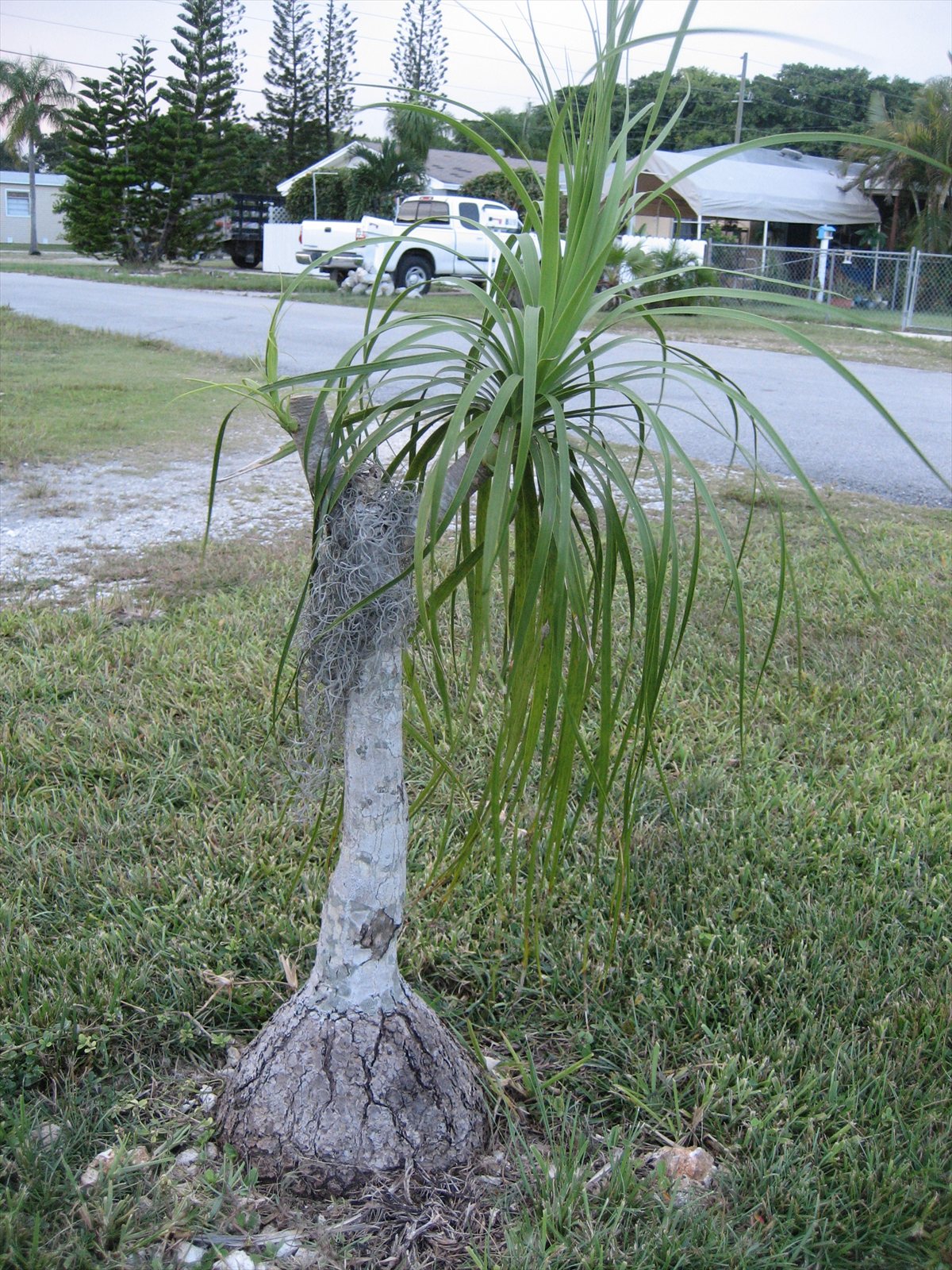
The plant has a thick swollen base that stores water, usually narrowing into one or more upright trunks. Long narrow leaves emerge in a fountain-like tuft and may curl toward the ends.
Young plants may look like a round bulb with a grassy top. Older specimens can become tree-like, but the swollen base remains an important clue.
Not a true palm
Despite its name, ponytail palm belongs to the asparagus family rather than the palm family. The palm-like silhouette is a growth habit, not a botanical identity.
That matters because the word palm is shared by unrelated plants with very different safety profiles.
Ponytail palm versus sago palm
Ponytail palm has a smooth swollen base and soft strap-like leaves. Sago Palm is a cycad with a crown of stiff feather-like fronds and may produce large seeds.
Sago Palm is an emergency-level toxic plant. When the identity is uncertain, use the Sago Palm record and contact a veterinarian rather than assuming the safer match.
Keeping it pet-friendly
Place the pot where pets cannot pull on the long leaves or knock the heavy base over. Pick up broken leaf tips promptly.
Fertilizer, pesticide, decorative stones, and potting material are separate exposures from the non-toxic plant.
Related plant records
Evidence and sources
- ASPCA — Pony TailBeaucarnea recurvata is listed as non-toxic to cats and dogs.
- NC State Extension — Beaucarnea recurvataPonytail palm is not a true palm; it has a swollen water-storing base and long narrow leaves that arch or curl.
- ASPCA — Toxic and Non-Toxic PlantsThe list is not all-inclusive; individual plants may differ in appearance; any plant material may cause vomiting or gastrointestinal upset.
Practical next steps
Plan around this plant
These guides help with household setup. They do not change this plant’s toxicity conclusion or replace veterinary advice.