
Plant safety record
Areca Palm
Chrysalidocarpus lutescens
Areca palm is one of the easier houseplants to live with around cats and dogs. The ASPCA lists it as non-toxic to both. That does not make the leaves a snack, though—chewing any plant can still lead to vomiting or an upset stomach.

Cats
NON-TOXIC
A correctly identified areca palm is not expected to poison a cat. A curious cat may still vomit or have mild stomach trouble after chewing the leaves.
Dogs
NON-TOXIC
A correctly identified areca palm is not expected to poison a dog. Watch for stomach upset if your dog chewed or swallowed a noticeable amount.
Quick answer
Areca palm is considered non-toxic to cats and dogs. For a small nibble, the usual response is to remove the plant, offer water, and keep an eye on your pet.
Call your veterinarian if vomiting continues, your pet seems unusually tired, refuses food or water, or swallowed a large amount. A non-toxic plant can still cause trouble when enough tough plant material is eaten.
Plant identity
Dypsis lutescens
If your pet chewed a leaf
Take away loose pieces and check the mouth for any leaf strands that are easy to remove. Do not reach deep into the throat or force food, milk, oil, or another home remedy.
If your pet is acting normally, observation may be all that is needed. Keep the plant label or a clear photo nearby in case symptoms appear and you need help confirming the identification.
What signs should you watch for?
The main concern after chewing a correctly identified areca palm is nonspecific stomach upset rather than poisoning. You might see drooling, a single episode of vomiting, soft stool, or less interest in food.
Repeated vomiting, marked lethargy, trouble swallowing, breathing changes, or symptoms that keep getting worse deserve a veterinary call. Those signs may point to a larger exposure, irritation, a swallowed object, or a plant-identification mistake.
Make sure it is really an areca palm
Plant names are not always tidy. The houseplant commonly sold as areca palm is also called golden butterfly palm, cane palm, golden feather palm, and yellow palm.
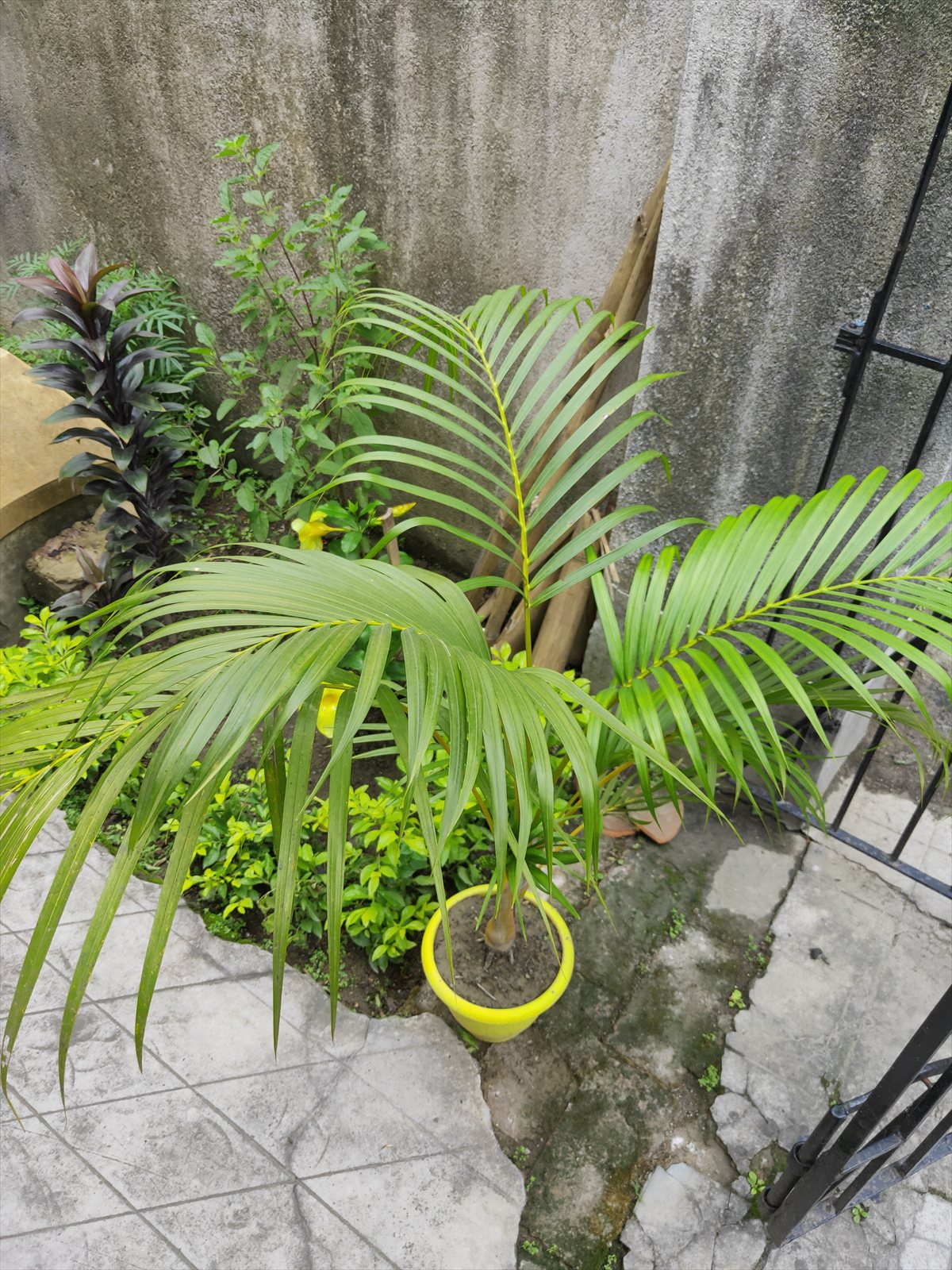
Look for a clumping plant with several cane-like stems and long, arching fronds made up of many narrow leaflets. If the plant does not match that description, pause before assuming the non-toxic rating applies.
Why the scientific name may look different
Many pet-safety references list this plant as Dypsis lutescens. Current botanical references may instead use Chrysalidocarpus lutescens. They are names for the same plant in this context.
That name change is less important than matching the actual plant. A nursery tag, purchase record, or clear whole-plant photo is more useful than guessing from the word “palm.”
An easy way to prevent repeat chewing
Move the pot away from a favorite window ledge or walking route and pick up fallen leaflets before they become toys. A heavier planter can also help if your pet likes to tip pots.
For cats that keep returning to the leaves, give them a more appealing legal target, such as veterinarian-approved cat grass, and place the palm where it is genuinely out of reach rather than simply higher on the same climbable furniture.
When identification is uncertain
Do not rely on a common name alone if your pet is sick. Take photos of the whole plant, the stems, and a close view of the leaves, then contact your veterinarian or an animal poison-control service.
Tell them what was eaten, roughly when it happened, and what symptoms you have seen. It is better to check an uncertain plant than to assume every houseplant sold as a palm has the same safety profile.
Related plant records
Evidence and sources
- ASPCA — Areca PalmDypsis lutescens and its listed common names are non-toxic to cats and dogs.
- ASPCA — Toxic and Non-Toxic Plants ListAny plant material may cause vomiting or gastrointestinal upset even when the plant is listed as non-toxic.
- Kew Plants of the World OnlineChrysalidocarpus lutescens is currently accepted; Dypsis lutescens is treated as a synonym.
- NC State Extension Plant ToolboxClumping stems, arching pinnate leaves, and common-name identification features.
- ASPCA ARECA PALM
- ASPCA NONTOXIC RULE
Practical next steps
Plan around this plant
These guides help with household setup. They do not change this plant’s toxicity conclusion or replace veterinary advice.