
Plant safety record
Schefflera
Schefflera
Schefflera is toxic to cats and dogs. Chewing can cause intense mouth and throat irritation, drooling, vomiting, and difficulty swallowing. Some larger umbrella-tree species also contain saponins and terpenoids that may contribute to vomiting or diarrhea.

Cats
TOXIC
Cats may drool, paw at the mouth, vomit, or stop eating after chewing Schefflera leaves or stems.
Dogs
TOXIC
Dogs may develop mouth pain, lip or tongue irritation, drooling, vomiting, diarrhea, or difficulty swallowing.
Quick answer
Take the plant away and remove loose pieces that are easy to reach. Call your veterinarian if mouth pain, drooling, vomiting, or swallowing difficulty is more than mild.
Trouble breathing, marked swelling, repeated vomiting, or an inability to swallow normally requires urgent veterinary attention.
Plant identity
Heptapleurum arboricola or related Schefflera-labeled plants
What happens when it is chewed
Schefflera plants contain insoluble calcium oxalate crystals that irritate the lips, tongue, mouth, and throat when plant tissue is bitten or crushed.
ASPCA also identifies terpenoids and saponins in the larger umbrella-tree identity. The most visible effects are usually mouth irritation, vomiting, or diarrhea.
Signs to watch for
Expected signs include mouth pain, excessive drooling, vomiting, difficulty swallowing, reduced appetite, and sometimes diarrhea.
Unusual breathing sounds, worsening swelling, severe distress, persistent vomiting, or refusal to drink deserves prompt veterinary care.
Sap on skin, fur, or eyes
Schefflera sap can irritate sensitive skin. Prevent a pet from grooming contaminated fur and rinse visible sap from skin or coat with plain water.
Squinting, tearing, redness, or known eye contact needs veterinary guidance. Do not apply a cream or eye drop unless directed.
What to do right now
Move the plant out of reach and save the label or take photographs. Do not reach deep into the throat, make your pet vomit, or force food or a home remedy.
Contact your veterinarian or an animal poison-control service when the amount or identity is uncertain or symptoms have begun.
How to recognize dwarf schefflera
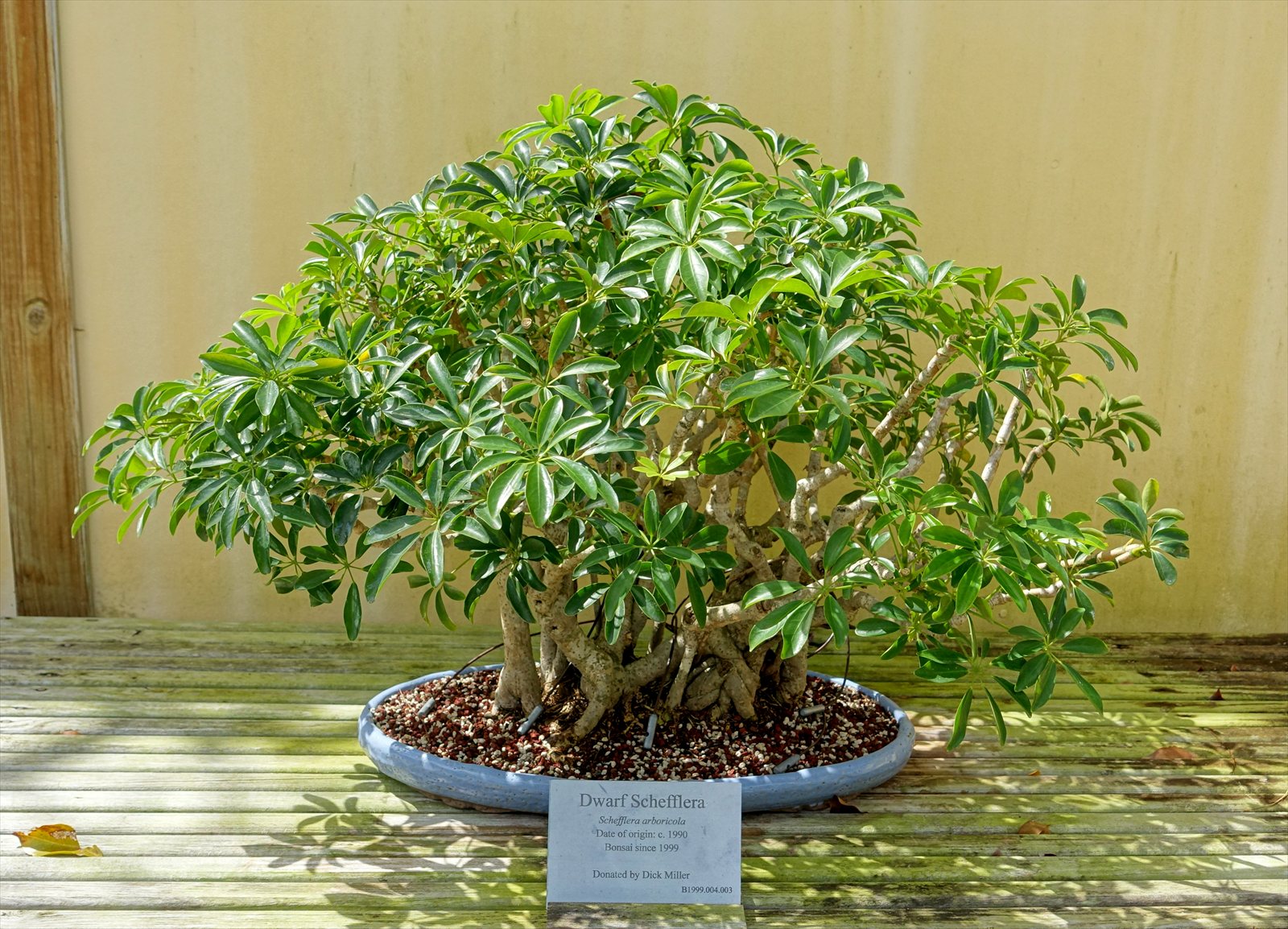
Dwarf schefflera has glossy compound leaves. Seven to nine oval leaflets commonly spread from one point like the spokes of an umbrella.
Houseplants may be green or variegated and grow as branching shrubs or small trees. Indoor plants rarely produce their red flower clusters or dark fruit.
Why the scientific name may differ
Dwarf schefflera was widely known as Schefflera arboricola and is now commonly classified as Heptapleurum arboricola.
Larger umbrella trees may appear under Schefflera or Brassaia actinophylla. The naming difference does not make chewed foliage safe.
Preventing another bite
Keep leaves away from furniture and walking routes, and clean up pruning pieces immediately. A tall pot is not protective when lower branches remain within reach.
For a persistent plant chewer, replacing Schefflera with a verified non-toxic species is safer than relying on placement alone.
Related plant records
Evidence and sources
- ASPCA — ScheffleraSchefflera is toxic to cats and dogs because of calcium oxalate crystals; signs include oral burning, drooling, vomiting, and difficulty swallowing.
- ASPCA — Umbrella TreeBrassaia actinophylla contains terpenoids, saponins, and insoluble oxalates; mild vomiting and diarrhea are common effects.
- NC State Extension — Heptapleurum arboricolaDwarf schefflera, formerly Schefflera arboricola, has glossy palmate leaves with seven to nine leaflets and can cause mouth and throat irritation in pets.