
Plant safety record
Monstera
Monstera deliciosa
Monstera deliciosa is toxic to cats and dogs because chewing releases insoluble calcium oxalate crystals. The usual problem is immediate burning and swelling in the mouth, drooling, vomiting, and difficulty swallowing.

Cats
TOXIC
Cats may drool, paw at the mouth, vomit, or stop eating after chewing Monstera leaves or stems.
Dogs
TOXIC
Dogs may develop mouth pain, lip or tongue swelling, drooling, vomiting, or difficulty swallowing.
Quick answer
Take the plant away and remove loose pieces that are easy to reach. Call your veterinarian if mouth pain, swelling, drooling, or vomiting is more than mild.
Trouble breathing, marked swelling, repeated vomiting, or an inability to swallow normally requires urgent veterinary attention.
Plant identity
Monstera deliciosa
What happens when it is chewed
Chewing Monstera damages plant cells and releases needle-like insoluble calcium oxalate crystals. Those crystals irritate the lips, tongue, mouth, and throat.
The pain often begins quickly. A pet may stop chewing after one bite and still show heavy drooling, gagging, or pawing at the face.
Signs to watch for
Expected signs include oral pain, swelling of the lips or tongue, excessive drooling, vomiting, and difficulty swallowing.
Unusual breathing sounds, worsening swelling, severe distress, persistent vomiting, or refusal to drink deserves prompt veterinary care.
What to do right now
Move the plant out of reach and collect fallen leaves or stems. Do not reach deep into the throat, make your pet vomit, or force food, milk, oil, or another home remedy.
Keep a label or take photographs of the whole plant and damaged area. Contact a veterinarian or animal poison-control service when the amount is uncertain.
How to recognize Monstera deliciosa
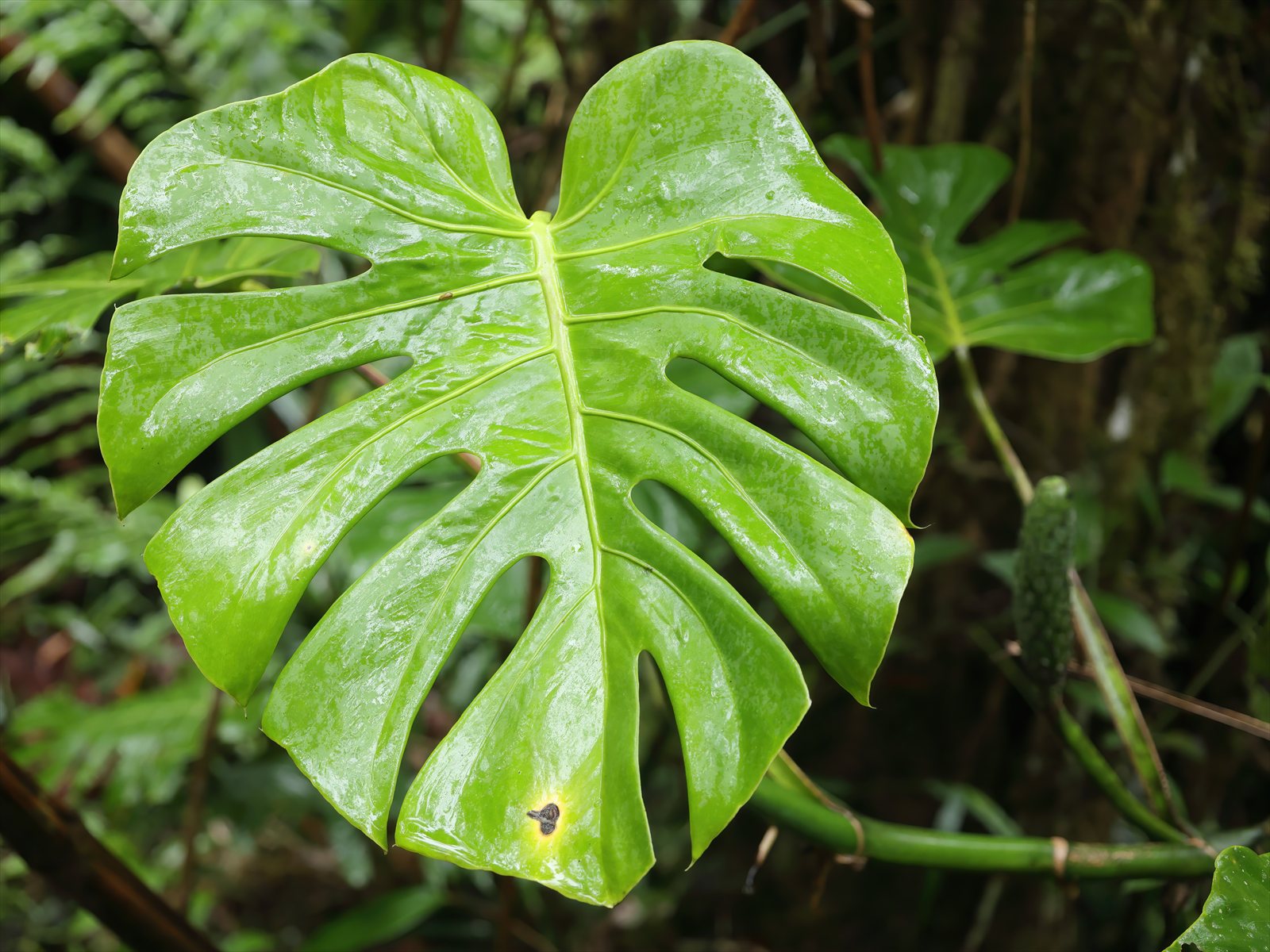
Monstera deliciosa is a climbing tropical plant with thick stems, aerial roots, and large glossy leaves. Mature leaves develop deep edge splits and enclosed holes called fenestrations.
Young leaves may be solid and heart-shaped, so the climbing habit, aerial roots, and label are useful when the distinctive holes have not appeared.
Monstera versus mini monstera
Mini monstera is Rhaphidophora tetrasperma, not a true Monstera. It usually has smaller leaves with edge splits and a more slender vine.
Both plants can cause calcium-oxalate mouth irritation, but keeping their identities separate improves search and plant matching.
Common names
Monstera deliciosa may be called ceriman, Swiss cheese plant, hurricane plant, cutleaf philodendron, or Mexican breadfruit.
Some of those names are also used loosely for other plants. Use the scientific name and whole-plant appearance rather than the word philodendron alone.
Preventing another bite
Tie climbing stems securely and remove pruning pieces immediately. A large leaf can hang into a pet's route even when the pot itself is high.
For a pet that repeatedly chews foliage, replacing Monstera with a verified non-toxic plant is safer than relying on placement alone.
Related plant records
Evidence and sources
- ASPCA — CerimanMonstera deliciosa is toxic to cats and dogs because of insoluble calcium oxalates; signs include mouth pain and swelling, drooling, vomiting, and difficulty swallowing.
- NC State Extension — Monstera deliciosaMonstera deliciosa is a climbing tropical plant with large glossy leaves that develop splits and holes; it contains calcium oxalate crystals.