
Plant safety record
Rubber Plant
Ficus species
Ficus elastica rubber plant can irritate the mouth and digestive tract of cats and dogs. Its milky sap may cause drooling, retching, vomiting, diarrhea, or skin irritation. Do not confuse it with Peperomia obtusifolia, the non-toxic baby rubber plant.

Cats
TOXIC
Cats may drool, retch, vomit, lose interest in food, or develop skin irritation after chewing the plant or contacting its sap.
Dogs
TOXIC
Dogs may develop mouth irritation, drooling, retching, vomiting, diarrhea, or skin irritation after exposure to Ficus elastica.
Quick answer
Take the plant away and collect loose pieces. Call your veterinarian if drooling, vomiting, diarrhea, mouth discomfort, or skin irritation is more than mild.
Eye exposure, repeated vomiting, difficulty swallowing, unusual weakness, or persistent pain deserves prompt veterinary attention.
Plant identity
Ficus elastica
What happens after chewing
Ficus species contain irritating chemicals in their milky sap. Biting leaves or stems can expose the mouth and gastrointestinal tract.
Common effects include oral irritation, drooling, retching, vomiting, diarrhea, and reduced appetite. The expected pattern is usually irritation rather than organ failure.
Sap on skin, fur, or eyes
Broken leaves and stems release milky sap. Skin contact can cause irritation, and sap on the coat may be swallowed during grooming.
Prevent licking and rinse visible sap from fur or skin with plain water. Squinting, tearing, redness, or known eye contact needs veterinary guidance.
What to do right now
Move the plant out of reach and save the label or take clear photographs. Do not make your pet vomit or apply a cream, medication, or home remedy unless directed.
Contact your veterinarian or an animal poison-control service when the amount is uncertain, symptoms have begun, or the plant identity is unclear.
How to recognize Ficus elastica
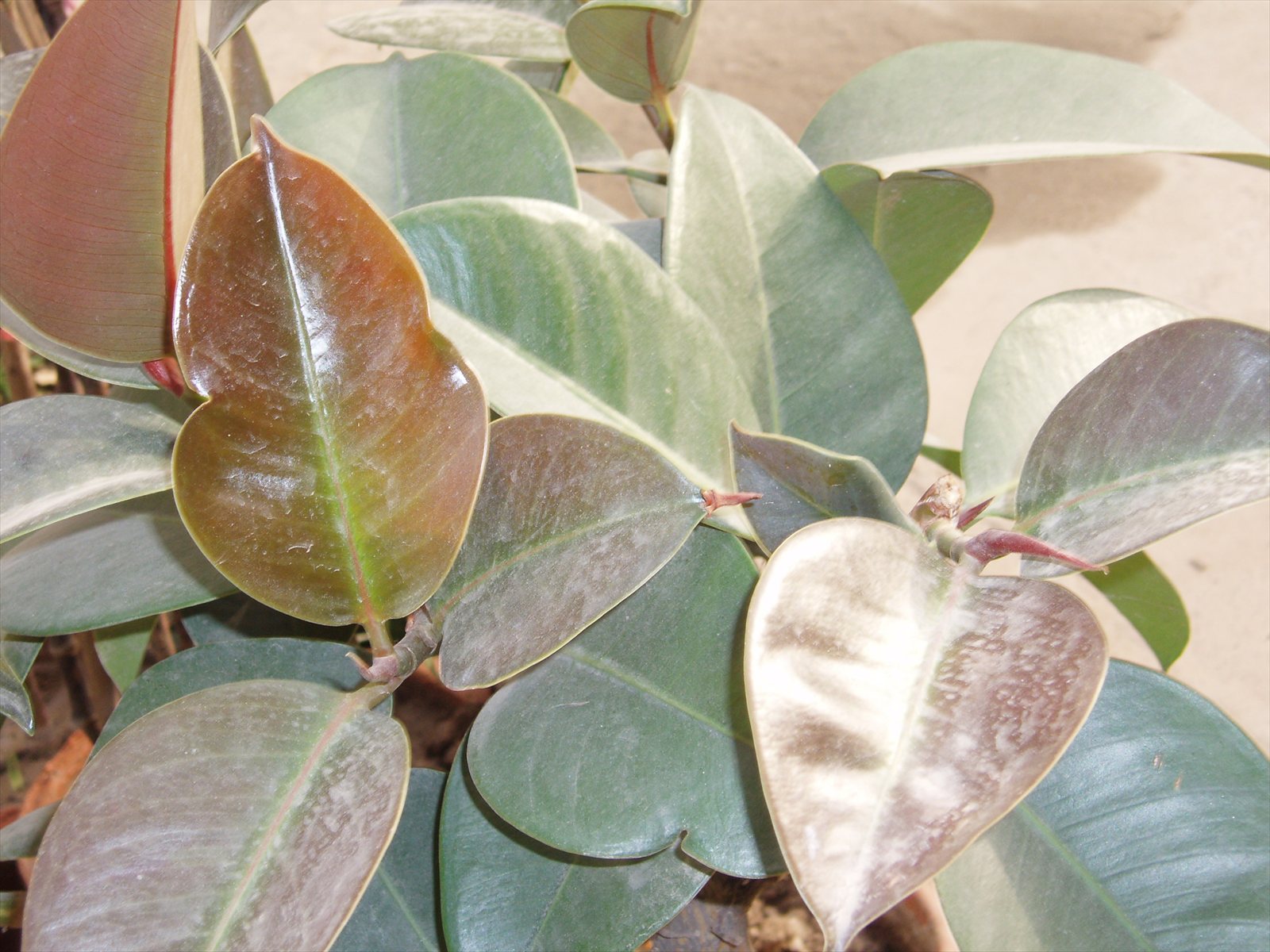
Rubber plant has large, stiff, glossy oval or oblong leaves on a sturdy upright stem. New leaves often emerge from a reddish or pink sheath.
Cultivars may be deep green, burgundy, or variegated with cream, pink, or pale green. Damaged tissue releases milky sap.
Rubber plant versus baby rubber plant
Ficus elastica is a woody fig relative with large leaves and irritating sap. Peperomia obtusifolia is a smaller herbaceous plant with rounded fleshy leaves and is listed as non-toxic.
Use the Peperomia record when the plant is labeled baby rubber plant, American rubber plant, or pepper face.
Other Ficus records
Fiddle-Leaf Fig and Weeping Fig are other Ficus houseplants with ingestion and sap concerns. Their leaf shapes differ, but the shared genus explains the similar irritation pattern.
Use the exact plant record rather than assuming every plant called fig or rubber plant is interchangeable.
Preventing another exposure
Keep leaves away from furniture and pet routes, and clean up pruning pieces immediately. Wear gloves if the sap irritates your skin.
For a persistent plant chewer, replacing Ficus elastica with a verified non-toxic plant is safer than relying on height alone.
Related plant records
Evidence and sources
- Pet Poison Helpline — Rubber Tree PlantFicus elastica sap can cause oral irritation, drooling, retching, vomiting, and minor gastrointestinal distress after ingestion.
- Pet Poison Helpline — FicusFicus sap can irritate the mouth, gastrointestinal tract, and skin; signs may include reduced appetite, drooling, vomiting, diarrhea, and skin irritation.
- NC State Extension — Ficus elasticaRubber plant has large stiff glossy leaves, sturdy stems, and milky sap; it is identified as a problem for cats and dogs.