
Plant safety record
Fiddle Leaf Fig
Ficus lyrata
Fiddle-leaf fig can irritate the mouth and digestive tract of cats and dogs. Chewing may cause drooling, vomiting, or other mild stomach upset, and the milky sap can irritate skin.

Cats
TOXIC
Cats may drool, vomit, or show mouth discomfort after chewing a leaf. Sap on the coat can create another exposure during grooming.
Dogs
TOXIC
Dogs may develop oral irritation, drooling, vomiting, or mild digestive upset. Sap may irritate the skin.
Quick answer
Take the plant away and collect loose pieces. Call your veterinarian if drooling, vomiting, mouth discomfort, or skin irritation is more than mild.
Eye exposure, repeated vomiting, difficulty swallowing, unusual weakness, or persistent pain deserves prompt veterinary attention.
Plant identity
Ficus lyrata
What happens after chewing
Fiddle-leaf fig belongs to the Ficus group. Chewing its leaves or stems can irritate the mouth and gastrointestinal tract.
Small ingestions are generally associated with mild effects, but the amount and the individual pet still matter. Do not assume that a large exposure can simply be watched without advice.
Sap on skin, fur, or eyes
Cut or broken stems and leaves release a milky latex-like sap. That sap can irritate skin and may be transferred to the mouth when a pet grooms.
Rinse visible sap from fur or skin with plain water while preventing licking. Squinting, tearing, redness, or known eye exposure needs veterinary guidance.
What to do right now
Move the plant out of reach and save the label or take clear photographs. Do not make your pet vomit or apply a cream, medication, or home remedy unless directed.
Contact your veterinarian or an animal poison-control service when the amount is uncertain, symptoms have begun, or the plant identity is unclear.
How to recognize fiddle-leaf fig
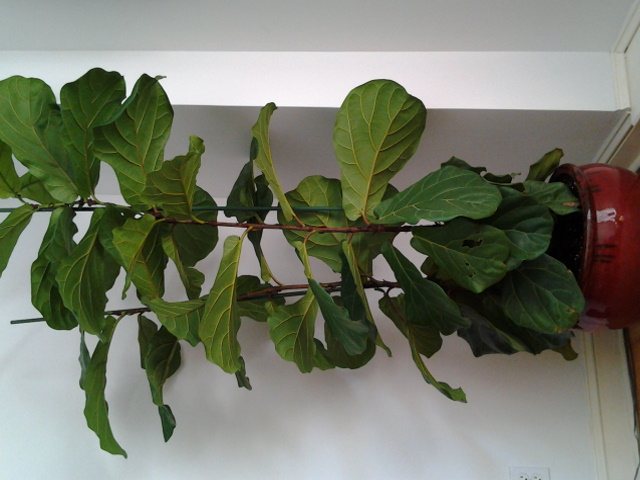
Ficus lyrata has large, thick, glossy leaves with prominent veins and a broad violin- or lyre-like outline. Leaves grow alternately on a woody upright stem.
Young indoor plants may be single-stemmed, while older specimens can branch into a small tree. Leaf size alone is not enough for identification.
Not every fiddle-leaf name means Ficus lyrata
Some unrelated plants use fiddle-leaf or fiddle-leaf philodendron in their common names. Those plants may have different toxic principles.
Use the scientific name Ficus lyrata, the leaf shape, and the woody growth habit before applying this record.
Related Ficus records
Rubber Plant and Weeping Fig are other Ficus houseplants with sap and ingestion concerns. Their leaves and growth habits differ, but the shared genus makes careful identification useful.
Use the related records rather than treating every fig-like houseplant as identical.
Preventing another exposure
Keep leaves away from furniture and pet routes, and clean up pruning pieces immediately. Wear gloves if the sap irritates your skin.
For a persistent plant chewer, replacing the plant with a verified non-toxic option is more reliable than height alone.
Related plant records
Decision support
Looking for a pet-safer alternative?
These are editorially reviewed alternatives for the visual or growth role described below. Correct identification still matters, and plants listed as non-toxic are not intended for pets to eat.
- Money TreePachira aquatica
Why consider it: an upright indoor foliage presence.
Money Tree is listed as non-toxic to cats and dogs by the cited source.
Safety conclusions link to each plant record’s cited source. Similarity is a reviewed, directional relationship—not an automatic visual match.
Evidence and sources
- ASPCA — Is That Houseplant Safe for Your Pets?ASPCA describes Ficus lyrata as mildly toxic to cats and dogs, with small ingestions posing a risk of mild gastrointestinal irritation.
- NC State Extension — Ficus lyrataFiddle-leaf fig is toxic to cats and dogs if ingested; oral irritation, excessive drooling, and vomiting may occur, and the sap can irritate skin.
Practical next steps
Plan around this plant
These guides help with household setup. They do not change this plant’s toxicity conclusion or replace veterinary advice.