
Plant safety record
Peperomia
Peperomia
Common ornamental Peperomia species are considered non-toxic to cats and dogs. ASPCA lists multiple Peperomia types—including obtusifolia, rotundifolia, and caperata—as non-toxic. Because the genus contains many species, this page keeps the conclusion scoped to correctly identified ornamental Peperomia.

Cats
NON-TOXIC
A correctly identified Peperomia is not expected to poison a cat. Chewing leaves may still cause mild vomiting or loose stool.
Dogs
NON-TOXIC
A correctly identified Peperomia is not expected to poison a dog. Eating a large amount of plant material may still upset the stomach.
Quick answer
For a small nibble from a correctly identified Peperomia, remove the plant and watch your pet. Normal access to water is appropriate.
Call your veterinarian if vomiting repeats, diarrhea is substantial, your pet seems unusually tired, or the plant may actually be a Ficus rubber plant or another look-alike.
Plant identity
Peperomia species — common ornamental types
What the non-toxic listing covers
ASPCA lists several common ornamental Peperomia species as non-toxic to cats and dogs, including blunt-leaf, trailing, ripple, and round-leaf forms.
That supports a genus-level guide for familiar houseplant types without claiming that every Peperomia species or every product used on the plant has been individually tested.
If your pet chewed it
Remove loose pieces and make sure your pet is swallowing and breathing normally. Do not make your pet vomit or give a home remedy.
Observation is often enough for a comfortable pet. Repeated vomiting, persistent diarrhea, choking concerns, or uncertain identification deserves a veterinary call.
How Peperomia can look
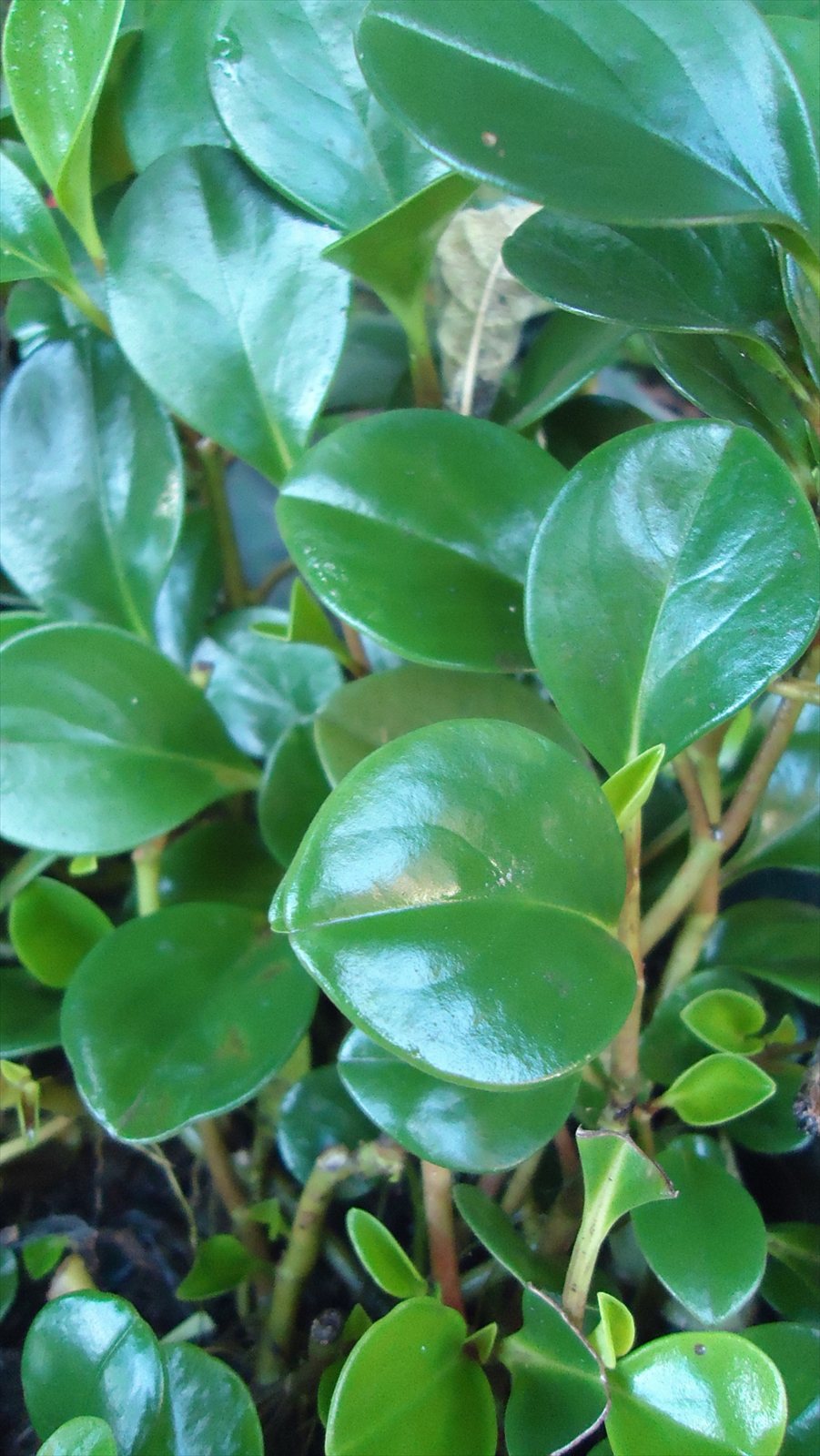
Peperomia is a diverse group. Some types are upright with thick glossy oval leaves, some form rippled rosettes, and others trail with small rounded leaves.
Many produce narrow pale flower spikes that look more like a rat-tail or spike than a showy flower.
Baby rubber plant is not a rubber tree
Peperomia obtusifolia is commonly sold as baby rubber plant or American rubber plant. It is non-toxic according to ASPCA.
Ficus elastica is also called rubber plant but is a different genus with sap and ingestion concerns. Use the Rubber Plant record when the plant is a woody Ficus.
Potting media and treatments
Fertilizer, pesticide, decorative moss, mold, and swallowed potting material are separate exposures from the non-toxic plant.
Save the product label or photograph the pot when the exposure may involve more than leaves or stems.
Keeping it pet-friendly
Move trailing stems away from furniture and pet routes, and pick up broken leaves. Use a stable pot if a cat likes to step onto the rim.
For repeated chewing, placement and enrichment are more useful than assuming non-toxic means the plant can be eaten freely.
Related plant records
Evidence and sources
- ASPCA — Blunt Leaf PeperomiaPeperomia obtusifolia is listed as non-toxic to cats and dogs.
- ASPCA — Peperomia RotundifoliaPeperomia rotundifolia is listed as non-toxic to cats and dogs.
- ASPCA — Green Ripple PeperomiaPeperomia caperata is listed as non-toxic to cats and dogs.
- NC State Extension — Peperomia obtusifoliaBaby rubber plant has glossy, cupped, rounded leaves on distinct branched stems and may produce narrow cream flower spikes.
- ASPCA — Toxic and Non-Toxic PlantsThe plant list is not all-inclusive, and any plant material may cause vomiting or gastrointestinal upset.
Practical next steps
Plan around this plant
These guides help with household setup. They do not change this plant’s toxicity conclusion or replace veterinary advice.
Record support
Optional shopping links
Plant Addicts shopping options
PawPlants plant identity and pet-safety conclusions remain based on the governed plant record. These merchant links are optional and do not change the classification.
PawPlants may earn a commission if you buy through these links. Recommendations do not affect plant-safety classifications.
PawPlants may earn a commission from qualifying purchases or transactions made through Plant Addicts affiliate links provided by Awin, at no additional cost to you.
Marble Peperomia
Optional shopping destination for the named cultivar within the governed Peperomia scope.
Rosso Peperomia
Optional shopping destination for the named cultivar within the governed Peperomia scope.