
Plant safety record
Jade Plant
Crassula ovata
Jade plant is toxic to cats and dogs. Vomiting and unusual tiredness are common concerns, and some pets may become weak, unsteady, or poorly coordinated. Call a veterinarian after a known ingestion rather than waiting to see whether the symptoms become severe.

Cats
TOXIC
Jade can cause vomiting, depression or lethargy, and incoordination in cats. Cats may be more sensitive than dogs in some exposures.
Dogs
TOXIC
Jade can cause vomiting, lethargy, and poor coordination in dogs. Contact a veterinarian after a meaningful or uncertain ingestion.
Quick answer
If your cat or dog chewed a jade plant, remove the plant and call your veterinarian. Be ready to describe which part was eaten, how much may be missing, and when it happened.
Do not make your pet vomit or give a home remedy unless a veterinary professional specifically tells you to.
Plant identity
Crassula ovata
Signs to watch for
Vomiting may be the first sign. A pet may also seem unusually quiet, lose interest in food, or have diarrhea.
Poor balance, stumbling, weakness, tremors, or behavior that seems unlike your pet deserves prompt veterinary attention.
What to do right now
Move the plant out of reach and collect any loose pieces. If possible, keep the pot label or take clear photos of the whole plant and leaves.
Call your veterinarian or an animal poison-control service. If your pet is collapsing, having a seizure, struggling to breathe, or cannot stand normally, seek emergency care.
What to tell the veterinary team
Report the plant name Crassula ovata if known, the time of exposure, which parts were chewed, and every symptom you have seen.
It is fine to say that you do not know the amount. A photo of the plant and any vomited plant material may help confirm the exposure.
How to recognize jade
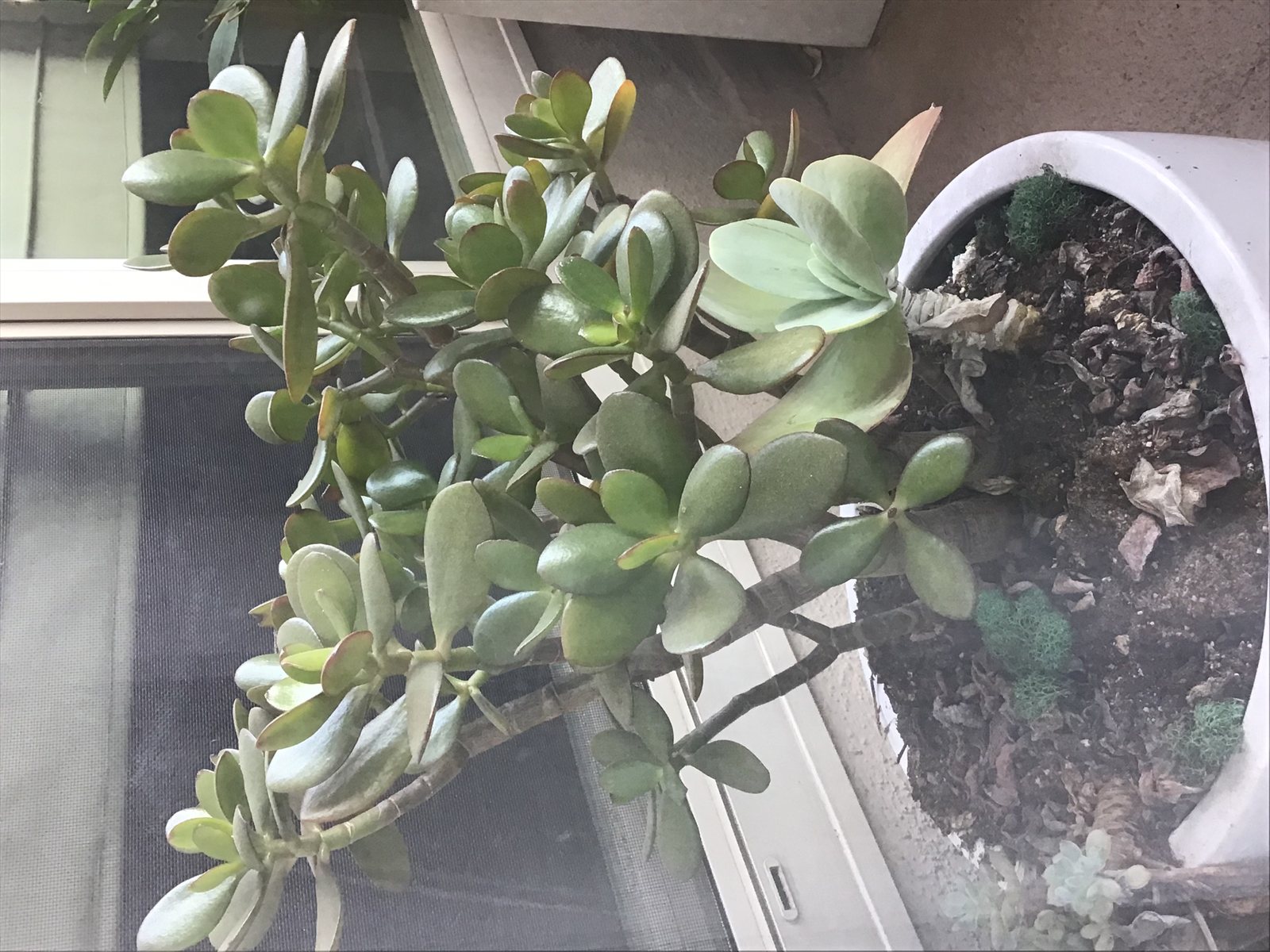
Jade is a succulent with thick, glossy oval leaves, usually arranged in opposite pairs on fleshy or increasingly woody stems. The leaf edges may turn red in bright light.
Some cultivars have tubular or curled leaves, so the exact shape can vary. The plump succulent texture is a better clue than color alone.
Do not confuse jade with money tree
Jade is sometimes sold as money plant, lucky plant, or money tree. Those names can also refer to Pachira aquatica, a different plant listed as non-toxic to cats and dogs.
Pachira has hand-shaped groups of thin leaflets and often a braided trunk. Jade has fleshy individual leaves. Use the Money Tree record to compare them.
The safest placement
Jade leaves detach easily and can fall where pets find them. Keep the plant away from ledges, climbing routes, and places where a bumped pot could spill.
For a persistent plant chewer, replacing jade with a verified non-toxic plant is more reliable than repeatedly moving the same pot.
Related plant records
Decision support
Looking for a pet-safer alternative?
These are editorially reviewed alternatives for the visual or growth role described below. Correct identification still matters, and plants listed as non-toxic are not intended for pets to eat.
- PeperomiaPeperomia
Why consider it: compact, fleshy-leaved houseplant character.
Peperomia is listed as non-toxic to cats and dogs by the cited source.
Safety conclusions link to each plant record’s cited source. Similarity is a reviewed, directional relationship—not an automatic visual match.
Evidence and sources
- ASPCA — Jade PlantJade plant is toxic to cats and dogs; reported signs include vomiting, depression, and incoordination.
- ASPCA — Is That Houseplant Safe for Your Pets?Jade exposure commonly causes gastrointestinal irritation and can also cause lethargy, ataxia, or tremors.
- ASPCA — Are Succulents Safe to Have Around Pets?Jade may also be called money tree or money plant and should not be confused with non-toxic Pachira aquatica.
- NC State Extension — Crassula ovataIdentification features include thick glossy oval leaves and branched fleshy stems; Crassula argentea is a former name.
Practical next steps
Plan around this plant
These guides help with household setup. They do not change this plant’s toxicity conclusion or replace veterinary advice.