
Plant safety record
Money Tree
Pachira aquatica
Pachira aquatica—the houseplant commonly sold with a braided trunk as a money tree—is considered non-toxic to cats and dogs. The important part is the botanical identity, because “money plant” and “money tree” are also used for jade plants, which are toxic.

Cats
NON-TOXIC
A correctly identified Pachira aquatica is not expected to poison a cat. Chewing leaves can still lead to nausea, vomiting, or loose stool.
Dogs
NON-TOXIC
A correctly identified Pachira aquatica is not expected to poison a dog. Watch for stomach upset after a larger chewing episode.
Quick answer
If your pet chewed a leaf from a correctly identified Pachira aquatica and is acting normally, remove the plant and watch for vomiting or loose stool.
Call your veterinarian if symptoms repeat, your pet cannot keep water down, seems weak, or the plant may actually be a different species sold under a similar name.
Plant identity
Pachira aquatica
The name matters more than it seems
Money tree and money plant are marketing names shared by several unrelated plants. The non-toxic listing on this page applies to Pachira aquatica.
Jade plant, Crassula ovata, may also be sold as money plant or money tree and is toxic to cats and dogs. Use the scientific name or visible plant features before relying on the label.
If your pet chewed a leaf
Remove loose pieces and check that your pet is swallowing and breathing normally. Do not make your pet vomit or force food, milk, or oil.
Mild stomach upset can happen after any plant is eaten. A veterinarian should hear about repeated vomiting, ongoing diarrhea, marked lethargy, or a large and uncertain exposure.
How to recognize Pachira aquatica
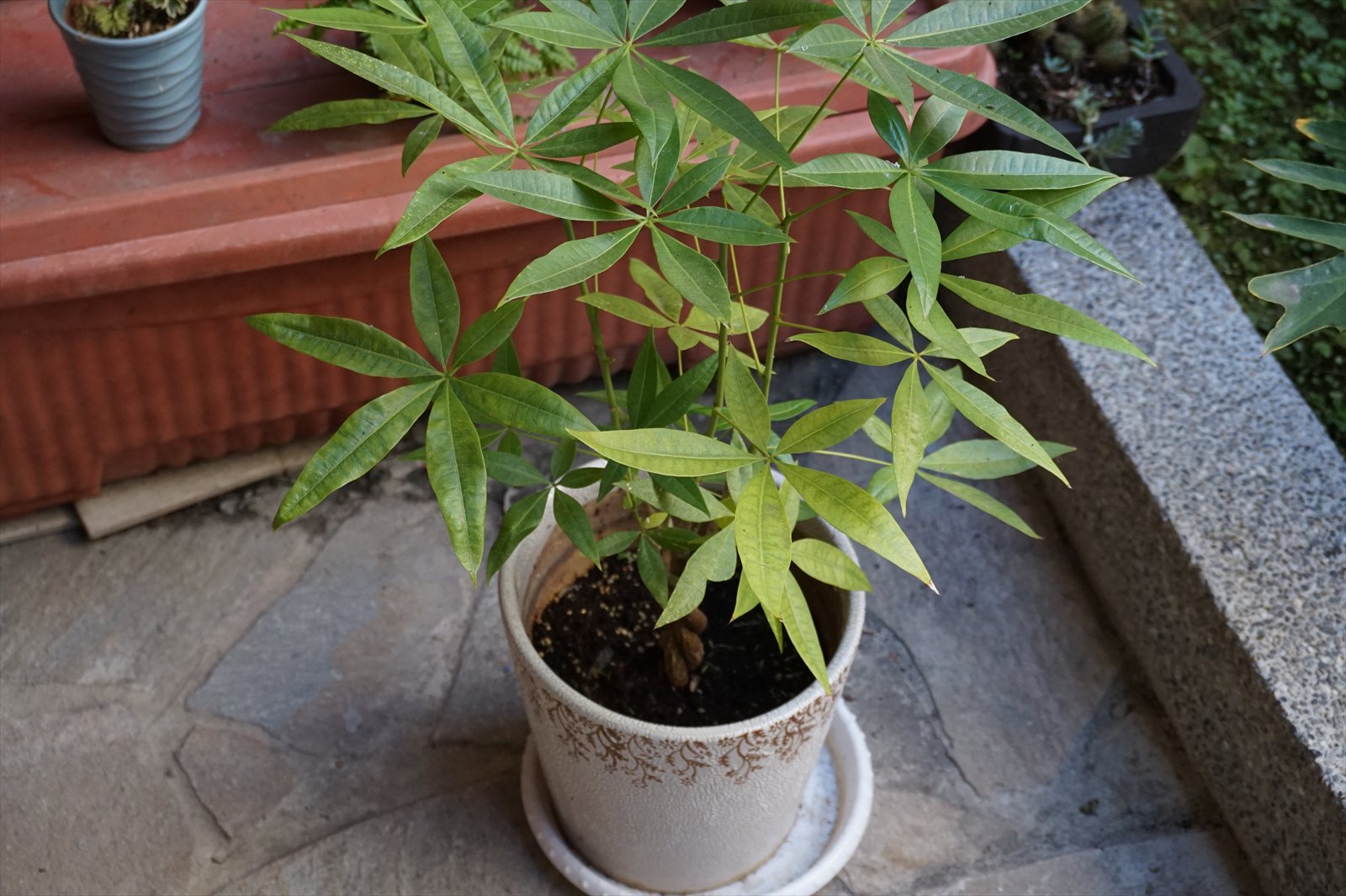
Houseplant money trees often have several flexible trunks braided together. Each leaf is made of five to nine shiny leaflets that spread from one point like fingers from a hand.
The braided trunk is common but not required. The hand-shaped compound leaves are a more useful identification clue than the pot style.
Money tree versus jade plant
Pachira aquatica has thin individual leaflets arranged in a fan. Jade has thick, fleshy oval leaves attached in pairs to succulent or woody stems.
When the plant has plump leaves rather than hand-shaped leaf clusters, compare it with the Jade Plant record before assuming it is non-toxic.
Keeping the plant pet-friendly
Move the pot away from favorite windows, shelves, and walking routes if your pet repeatedly chews the leaves. Pick up fallen leaves promptly.
A heavy pot can reduce tipping, but placement still matters. Cats may climb to a plant that appears high, and dogs may pull down low branches.
Related plant records
Evidence and sources
- ASPCA — Money TreePachira aquatica is listed as non-toxic to cats and dogs; nausea, vomiting, or loose stool may occur.
- NC State Extension — Money TreeIdentification features include a flexible or braided trunk and palmately compound leaves with five to nine leaflets.
- ASPCA — Toxic and Non-Toxic PlantsAny plant material may cause vomiting or gastrointestinal upset even when a plant is listed as non-toxic.
- ASPCA — Are Succulents Safe to Have Around Pets?Jade may also be called money tree or money plant and should not be confused with non-toxic Pachira aquatica.
Practical next steps
Plan around this plant
These guides help with household setup. They do not change this plant’s toxicity conclusion or replace veterinary advice.