
Plant safety record
Prayer Plant
Calathea insignis
“Prayer plant” is a shared common name rather than one precise species. ASPCA lists its prayer-plant entry—Calathea insignis, now commonly treated as Goeppertia insignis—as non-toxic to cats and dogs. Maranta leuconeura is another familiar plant using the same name, so PawPlants keeps this page identity-scoped.

Cats
NON-TOXIC
The ASPCA-listed prayer-plant identity is non-toxic to cats. Confirm the plant label before applying that conclusion to every patterned houseplant called prayer plant.
Dogs
NON-TOXIC
The ASPCA-listed prayer-plant identity is non-toxic to dogs. Use the botanical name when the plant is a Maranta, Goeppertia, or another look-alike.
Quick answer
A confirmed Goeppertia insignis matching ASPCA's prayer-plant entry is listed as non-toxic to cats and dogs. Mild stomach upset can still follow chewing.
When the label only says prayer plant, confirm whether it is Maranta leuconeura, Goeppertia insignis, or another plant before relying on one database entry.
Plant identity
Scientific identity: Calathea insignis
Why the name is ambiguous
NC State identifies both Maranta leuconeura and Goeppertia insignis as plants called prayer plant. Goeppertia insignis has also been known as Calathea insignis and Calathea lancifolia.
Retail labels may use old genus names, family-level terms, or cultivar names. The common name alone does not prove which plant is present.
What the ASPCA listing supports
ASPCA's prayer-plant record identifies Calathea insignis and lists it as non-toxic to cats and dogs. Current plant references commonly place that identity in Goeppertia.
This page does not silently extend that one listing to every unrelated patterned tropical plant sometimes sold under a similar name.
If your pet chewed it
Remove loose pieces and check that your pet is comfortable. Do not make your pet vomit or give a home remedy.
Call your veterinarian if vomiting repeats, diarrhea is substantial, your pet seems unusually tired, or the plant identity remains uncertain.
How Maranta leuconeura looks
Maranta leuconeura is low-growing and spreading, with oblong patterned leaves. Common forms have dark spots or red fishbone-like veins and reddish or purple leaf undersides.
The leaves rise into a more upright prayer position at night, which is the source of the common name.
How Goeppertia insignis differs
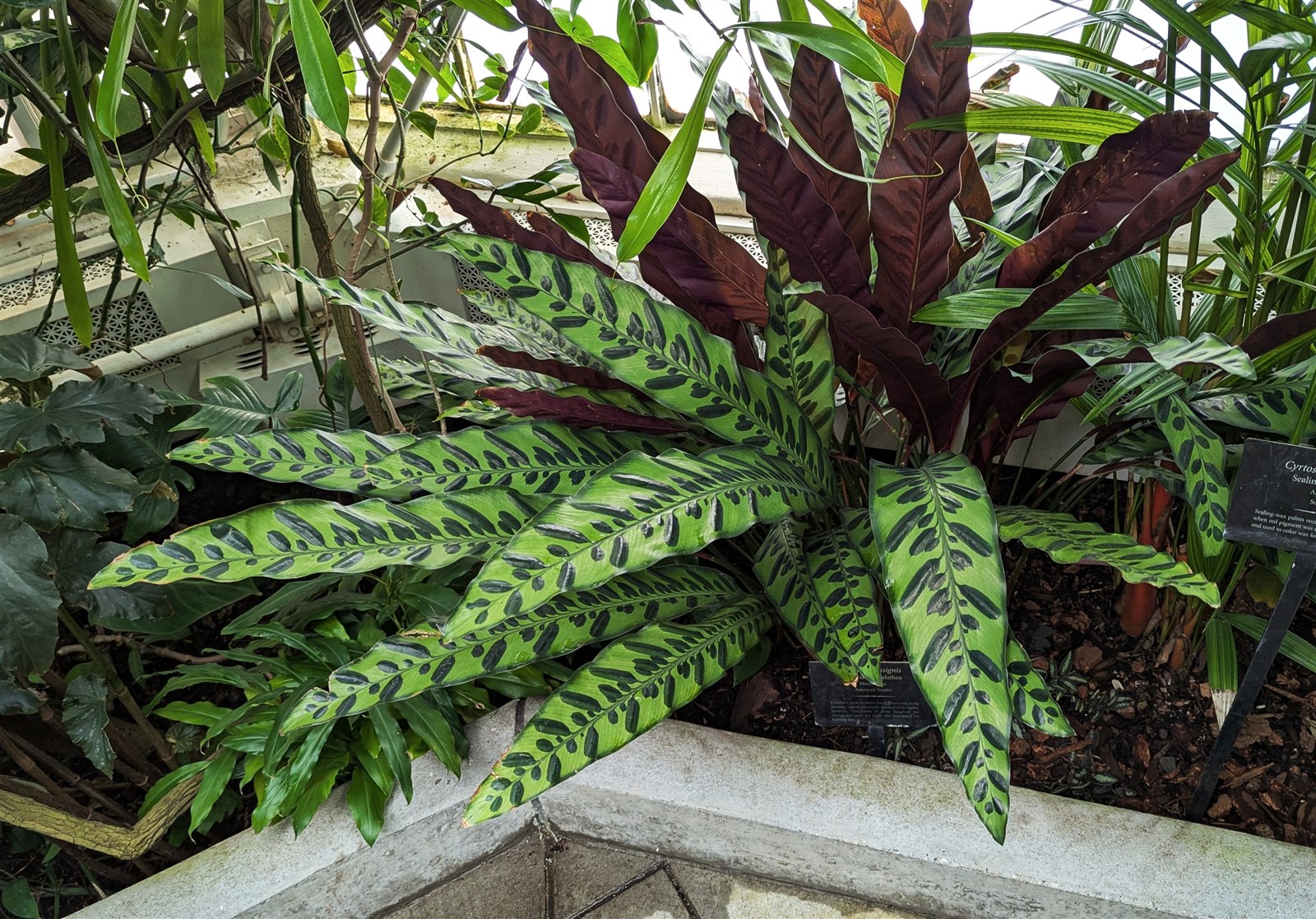
Goeppertia insignis, often sold as rattlesnake plant, has long narrow leaves with wavy edges, alternating dark markings, and purple undersides.
Older labels may say Calathea insignis or Calathea lancifolia. Those names can refer to the same familiar plant identity.
Why this page has no single photograph
A photograph of one species would make the other common prayer-plant identity easier to misidentify. The no-image state is deliberate.
Use the plant label, whole growth habit, leaf shape, markings, and underside color together. Do not delay veterinary help while seeking a perfect identification.
Related Calathea guidance
Many plants formerly sold as Calathea are now classified as Goeppertia. The Calathea record explains that naming shift and its non-toxic genus-level listing.
Use both pages when a label contains Calathea, Goeppertia, Maranta, prayer plant, or rattlesnake plant.
Related plant records
Evidence and sources
- ASPCA — Prayer PlantASPCA lists its prayer-plant entry, identified as Calathea insignis, as non-toxic to cats and dogs.
- NC State Extension — Maranta leuconeuraMaranta leuconeura is called prayer plant and has patterned oblong leaves that rise at night; Goeppertia insignis is another plant using the same common name.
- NC State Extension — Goeppertia insignisGoeppertia insignis, formerly Calathea insignis or C. lancifolia, is also called prayer plant and rattlesnake plant.
- ASPCA — Toxic and Non-Toxic PlantsThe list is not all-inclusive; individual plants may differ in appearance; any plant material may cause vomiting or gastrointestinal upset.
Practical next steps
Plan around this plant
These guides help with household setup. They do not change this plant’s toxicity conclusion or replace veterinary advice.