
Plant safety record
Boston Fern
Nephrolepis exaltata
Boston fern is considered non-toxic to cats and dogs. A pet that chews a large amount may still develop ordinary stomach upset, but a correctly identified Boston fern is not expected to cause serious plant poisoning.
.jpg)
Cats
NON-TOXIC
A correctly identified Boston fern is not expected to poison a cat. Watch for mild vomiting or loose stool after chewing.
Dogs
NON-TOXIC
A correctly identified Boston fern is not expected to poison a dog. Eating a large amount of fibrous fronds may still upset the stomach.
Quick answer
For a small nibble from a correctly identified Boston fern, remove the plant and watch your pet. Normal access to drinking water is appropriate.
Call your veterinarian if vomiting repeats, diarrhea is substantial, your pet seems weak, or the plant may actually be an asparagus fern or another look-alike.
Plant identity
Nephrolepis exaltata 'Bostoniensis'
What non-toxic means
Non-toxic means Boston fern is not expected to cause the characteristic poisoning associated with toxic houseplants. It does not make the fronds food.
Any plant material can irritate the stomach, particularly when a large amount is swallowed or a pet has a sensitive digestive system.
If your pet chewed a frond
Take away loose pieces and check that your pet is swallowing and breathing normally. Do not make your pet vomit or give a home remedy.
Observation is often enough when the pet remains comfortable. Repeated vomiting, persistent diarrhea, choking concerns, or unusual behavior deserves a veterinary call.
How to recognize Boston fern
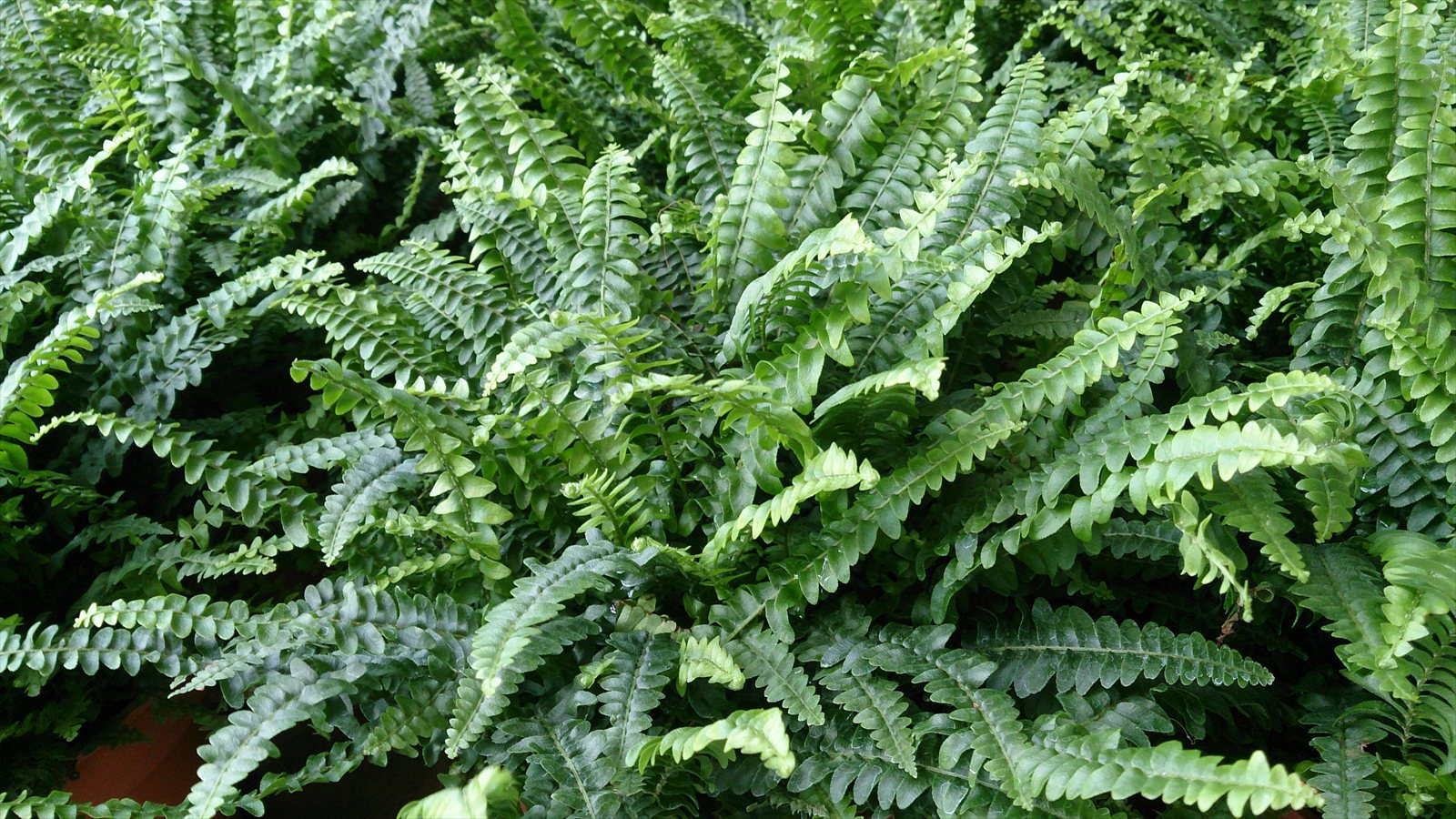
Boston fern forms a dense fountain of long arching fronds. Each frond is divided into many small leaflets arranged along a central stem and gradually tapers toward the tip.
Small round brown dots may appear in orderly patterns on the undersides of mature fronds. These sori are reproductive structures, not insects or poison glands.
Do not confuse it with asparagus fern
Asparagus fern is not a true fern and is toxic to cats and dogs. It has wiry branching stems, clusters of narrow needle-like growth, possible spines, and berries.
Boston fern has flat leafy fronds and does not produce berries. Use the Asparagus Fern record if the plant has wiry stems or fruit.
Keeping it pet-friendly
Hanging baskets can still shed fronds where pets reach them. Pick up fallen pieces and keep the pot away from climbing routes or furniture that makes the basket accessible.
Fertilizer, insect-control products, decorative moss, and potting soil are separate exposures from the non-toxic plant itself.
Related plant records
Evidence and sources
- ASPCA — Boston FernBoston fern is listed as non-toxic to cats and dogs.
- NC State Extension — Nephrolepis exaltataBoston fern identification includes arching, tapering pinnate fronds with many small pinnae and round sori on the undersides.
- ASPCA — Toxic and Non-Toxic PlantsAny plant material may cause vomiting or gastrointestinal upset even when the plant is listed as non-toxic.
Practical next steps
Plan around this plant
These guides help with household setup. They do not change this plant’s toxicity conclusion or replace veterinary advice.