
Plant safety record
Venus Fly Trap
Dionaea muscipula
ASPCA lists the correctly identified Venus fly trap, Dionaea muscipula, as non-toxic to cats and dogs. Its snap traps are delicate plant tissue, and chewing any plant material can still cause mild stomach upset.

Cats
NON-TOXIC
ASPCA classifies Dionaea muscipula as non-toxic to cats. Chewing may still irritate the mouth or stomach, and damaged traps will not benefit the plant.
Dogs
NON-TOXIC
ASPCA classifies Dionaea muscipula as non-toxic to dogs. Eating potting material or a large amount of any plant can create separate digestive concerns.
Quick answer
A small nibble from a correctly identified Venus fly trap is not expected to cause characteristic plant poisoning. Remove loose material, protect the remaining traps, and watch for persistent digestive signs.
Call a veterinarian if vomiting or diarrhea continues, your pet seems unwell, or the plant identity is uncertain.
Plant identity
Approved alternate names for this record: Venus Flytrap. These names are searchable only within the exact botanical scope described below.
This record is limited to Dionaea muscipula. The spaced and closed spellings of Venus fly trap refer to the same species here; the common name is not used to transfer the conclusion to other carnivorous plants.
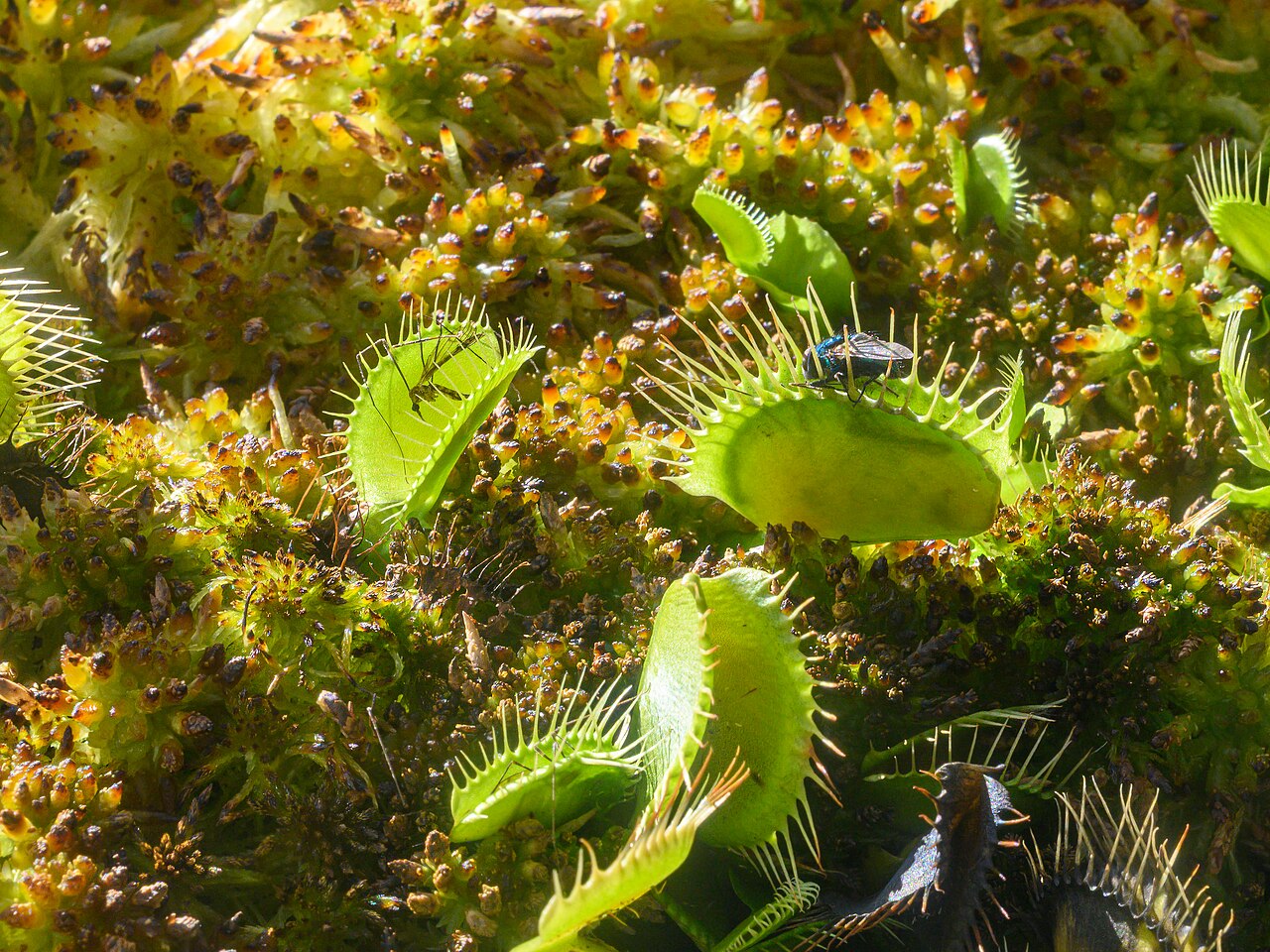
Dionaea muscipula forms a low rosette of hinged trap leaves edged with bristles. The retained Kew record recognizes this scientific name as an accepted species.
What non-toxic means
Non-toxic is an evidence classification, not a recommendation that pets eat the plant. ASPCA's exact-species record supports the cat and dog conclusions on this page.
Water, growing media, fertilizer, pesticides, and prey remains are separate exposures. A symptom after chewing should be assessed on what the pet actually contacted, not on the plant label alone.
If your pet chewed it
Move the plant and remove loose material from reach. Do not induce vomiting or give a home remedy unless a veterinary professional directs you to do so.
Monitor for repeated vomiting, diarrhea, coughing, trouble swallowing, unusual tiredness, or evidence that another plant was involved. Seek veterinary advice when signs persist or identification is uncertain.
How to recognize Venus Fly Trap
The plant grows as a compact basal rosette. Each leaf ends in two hinged lobes with marginal bristles; mature traps may color red inside in strong light.
White flowers appear on a leafless stalk above the traps. Buy nursery-propagated plants rather than collecting them from the wild.
Care and placement
NC State Extension describes a high-light bog plant that needs consistently wet, acidic, low-nutrient media. Use rainwater or distilled water where tap water is hard or heavily treated, and do not let the growing medium dry out.
Do not fertilize the traps or repeatedly trigger them for entertainment. The plant has a winter dormancy cycle, so seasonal slowing is not automatically a sign that it needs feeding.
Evidence and sources
- Royal Botanic Gardens, Kew — Plants of the World Online — Dionaea muscipula J.EllisKew marks Dionaea muscipula as an accepted species.
- ASPCA Animal Poison Control — Venus Fly TrapExact-species ASPCA record; the compact spelling is a normalized alternate of the page title, not a different identity.
- NC State Extension — Venus Flytrap — Dionaea muscipulaInstitutional horticultural source used for the care and approved discovery-trait statements.