
Plant safety record
Taro
Colocasia esculenta
ASPCA lists Colocasia esculenta as toxic to cats and dogs because its insoluble calcium oxalate crystals can cause intense oral irritation, drooling, vomiting, and difficulty swallowing.

Cats
TOXIC
ASPCA classifies Colocasia esculenta as toxic to cats. Insoluble calcium oxalates can cause oral burning, excessive drooling, vomiting, and difficulty swallowing.
Dogs
TOXIC
ASPCA classifies Colocasia esculenta as toxic to dogs. Insoluble calcium oxalates can cause oral burning, excessive drooling, vomiting, and difficulty swallowing.
Quick answer
Treat chewing of raw Colocasia esculenta as a reason for prompt veterinary or animal poison-control advice, especially when mouth pain, drooling, or trouble swallowing is present.
Do not induce vomiting or offer a home remedy unless a veterinary professional directs it.
Plant identity
This record covers Colocasia esculenta only. Caladium, elephant ear, and malanga are not searchable aliases here because those names can identify different governed plants or multiple taxa.
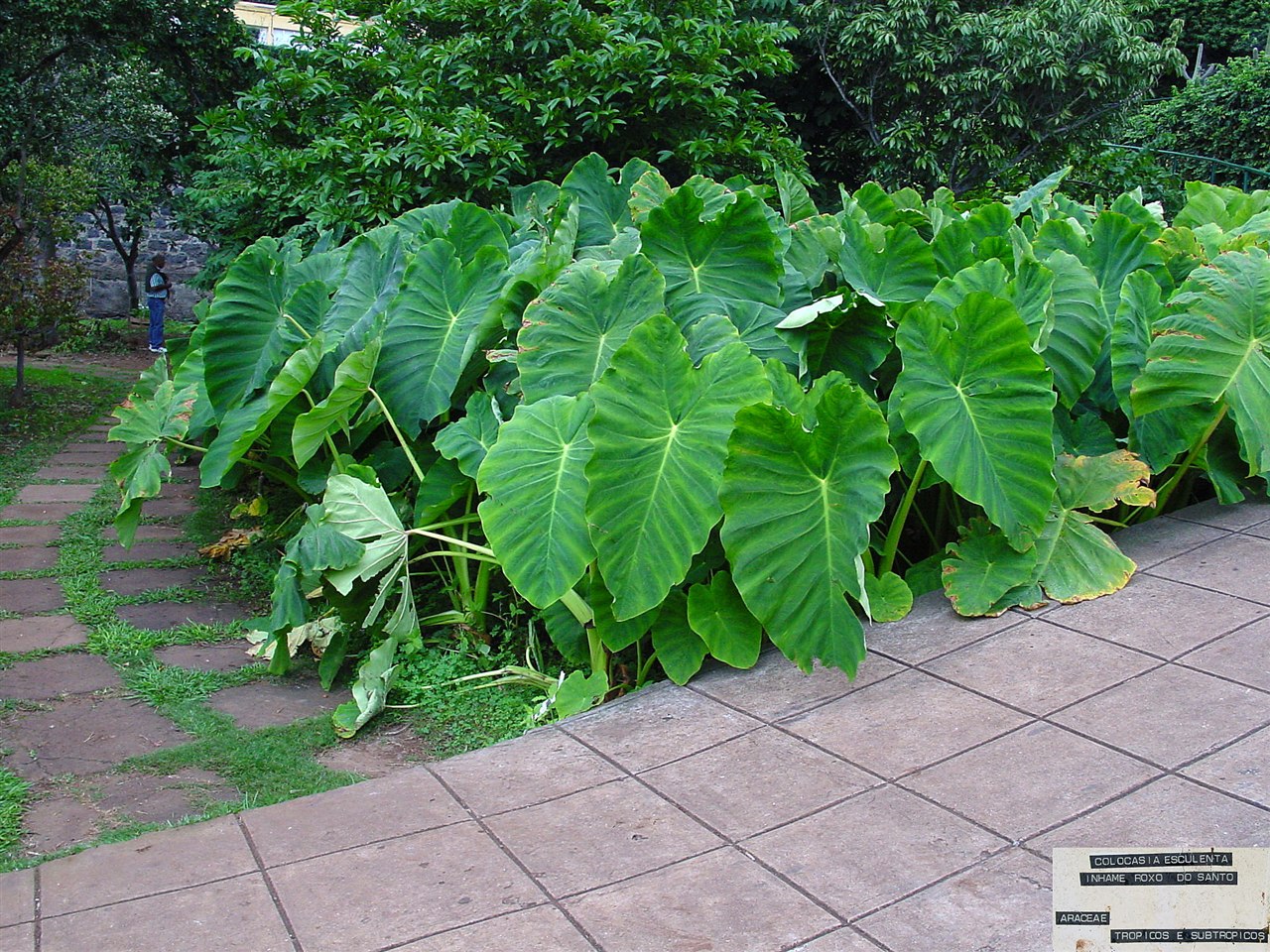
Taro grows from a corm and forms a large clump of smooth, heart- to arrow-shaped leaves on substantial petioles. Kew recognizes Colocasia esculenta as accepted.
Why this plant is a concern
ASPCA's exact-species record identifies insoluble calcium oxalates as the toxic principle for cats and dogs. The crystals injure tissues on contact rather than requiring systemic absorption.
Culinary processing of taro is outside the scope of a pet-safety page and does not make raw ornamental plant material safe for pets.
If your pet chewed it
Remove plant material from reach, rinse visible residue from the mouth with plain water if this can be done safely, and contact a veterinarian or animal poison-control service.
Breathing difficulty, pronounced swelling, inability to swallow, or repeated vomiting requires urgent veterinary attention.
How to recognize Taro
Colocasia esculenta has very large peltate leaves, with the petiole attaching inside the blade rather than at its edge. Plants commonly reach three to six feet.
The scientific label matters because elephant ear and Caladium terminology spans other aroids with separate PawPlants identities.
Care and placement
NC State Extension recommends part shade or filtered sun, rich soil, and consistently moist conditions. Do not allow the plant to dry completely, and protect the large leaves from strong wind.
It can grow as a large houseplant or summer container specimen. Its mature scale and moisture needs suit a floor-level container with protected placement away from pets.
Evidence and sources
- Royal Botanic Gardens, Kew — Plants of the World Online — Colocasia esculentaKew marks Colocasia esculenta as an accepted species.
- ASPCA Animal Poison Control — TaroExact-species ASPCA record. Insoluble calcium oxalates are identified as the toxic principle. Caladium, Elephant's Ears, and Malanga are retained only as qualified source terminology and are deliberately excluded from alternateNames.
- NC State Extension — Colocasia esculentaInstitutional horticultural source used for the care and approved discovery-trait statements.