
Plant safety record
Star Jasmine
Trachelospermum jasminoides
ASPCA lists Trachelospermum jasminoides as non-toxic to cats and dogs. Star jasmine is not a true Jasminum jasmine, so the scientific name is essential to this conclusion.

Cats
NON-TOXIC
ASPCA classifies Trachelospermum jasminoides as non-toxic to cats. The conclusion does not transfer to every plant called jasmine.
Dogs
NON-TOXIC
ASPCA classifies Trachelospermum jasminoides as non-toxic to dogs. Chewing foliage or contact with milky sap may still cause individual irritation.
Quick answer
A small chew from a correctly identified Trachelospermum jasminoides is not expected to cause characteristic plant poisoning. Remove access and watch for persistent irritation or digestive signs.
Call a veterinarian if symptoms continue, sap contact causes concern, or the plant is identified only by the broad word jasmine.
Plant identity
Approved alternate names for this record: Confederate Jasmine. These names are searchable only within the exact botanical scope described below.
This page is limited to Trachelospermum jasminoides. Star jasmine and Confederate jasmine are approved common names for this record, but the plant is not in the true jasmine genus Jasminum.
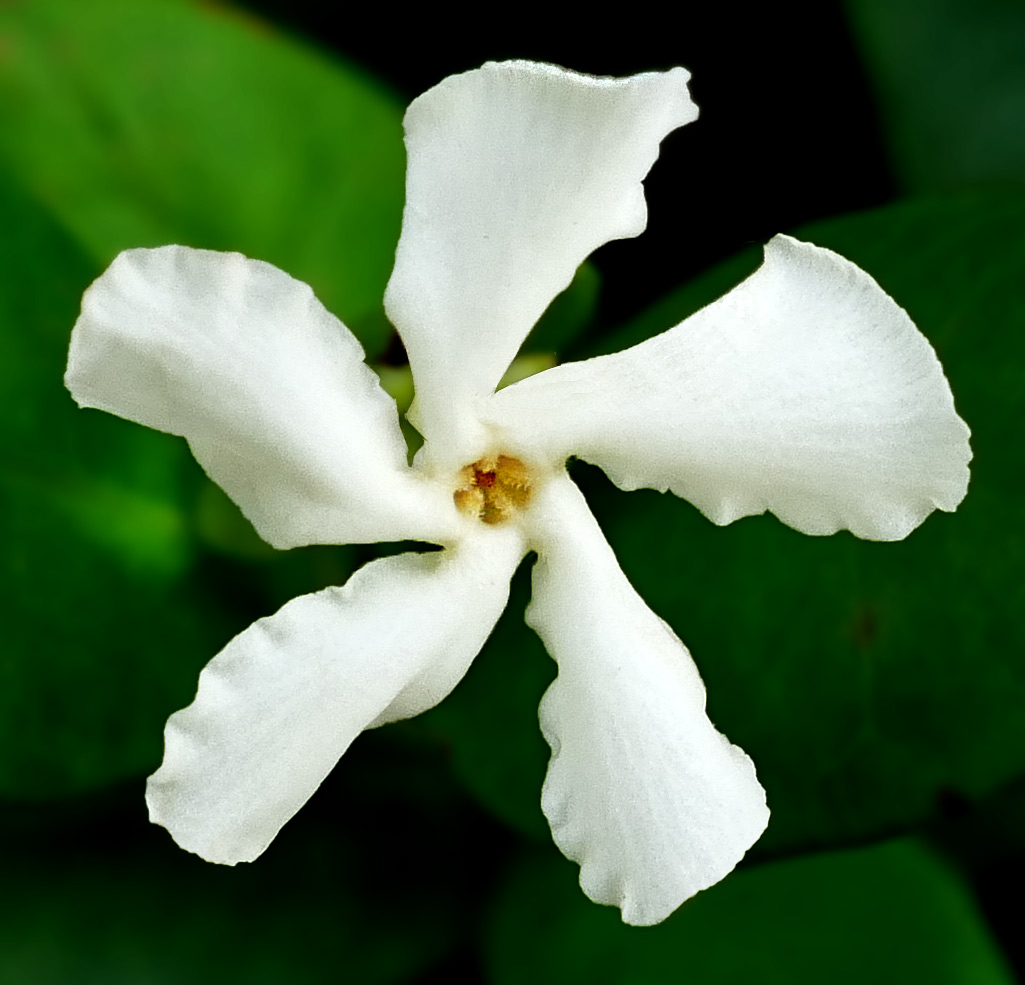
It is an evergreen twining vine with opposite glossy leaves and fragrant five-lobed white flowers. Kew recognizes Trachelospermum jasminoides as the accepted species.
What non-toxic means
ASPCA's exact-species entry supports non-toxic classifications for cats and dogs. The scientific label prevents that evidence from being broadened to unrelated jasmine-named plants.
Non-toxic is not the same as edible. The vine contains milky sap, and a pet may still react to plant material or to products used on the plant.
If your pet chewed it
Remove chewed material and rinse sap from fur or skin with plain water if needed. Do not induce vomiting or apply a home remedy unless a veterinary professional directs it.
Watch for ongoing mouth irritation, vomiting, diarrhea, or unusual behavior. Seek veterinary advice if symptoms persist or the identity could be another jasmine-named plant.
How to recognize Star Jasmine
Star jasmine has wiry twining stems, leathery opposite leaves, and pinwheel-like fragrant white flowers. Young evergreen foliage may take on bronze tones.
A support can turn the plant into a tall climber, while pruning can keep a container specimen smaller. Its milky sap and Trachelospermum label help separate it from true jasmines.
Care and placement
NC State Extension recommends fertile, well-drained soil and a sheltered sunny position for strongest flowering. In colder climates, grow it in a container that can be overwintered indoors.
The vine can climb to about twenty feet with support, so plan a trellis or prune after flowering to contain it. Clean pruning tools after contact with the sticky sap.
Evidence and sources
- Royal Botanic Gardens, Kew — Plants of the World Online — Trachelospermum jasminoides (Lindl.) Lem.Kew marks Trachelospermum jasminoides as an accepted species.
- ASPCA Animal Poison Control — Confederate JasmineExact-species ASPCA record covering cats and dogs; no conclusion is transferred to other plants called jasmine.
- NC State Extension — Star Jasmine — Trachelospermum jasminoidesInstitutional horticultural source used for the care and approved discovery-trait statements.