
Plant safety record
Old Man Cactus
Cephalocereus senilis
ASPCA lists Cephalocereus senilis as non-toxic to cats and dogs, but its long white hair-like radial spines conceal sharper central spines that can cause physical injury.
Cats
NON-TOXIC
ASPCA classifies Cephalocereus senilis as non-toxic to cats. Sharp central spines remain a physical hazard despite the woolly appearance.
Dogs
NON-TOXIC
ASPCA classifies Cephalocereus senilis as non-toxic to dogs. Sharp central spines remain a physical hazard despite the woolly appearance.
Quick answer
A chew is not expected to cause characteristic plant poisoning, but inspect for embedded spines or mouth injury and contact a veterinarian when injury or persistent symptoms are present.
Do not pull deeply embedded spines from the mouth or eye without professional guidance.
Plant identity
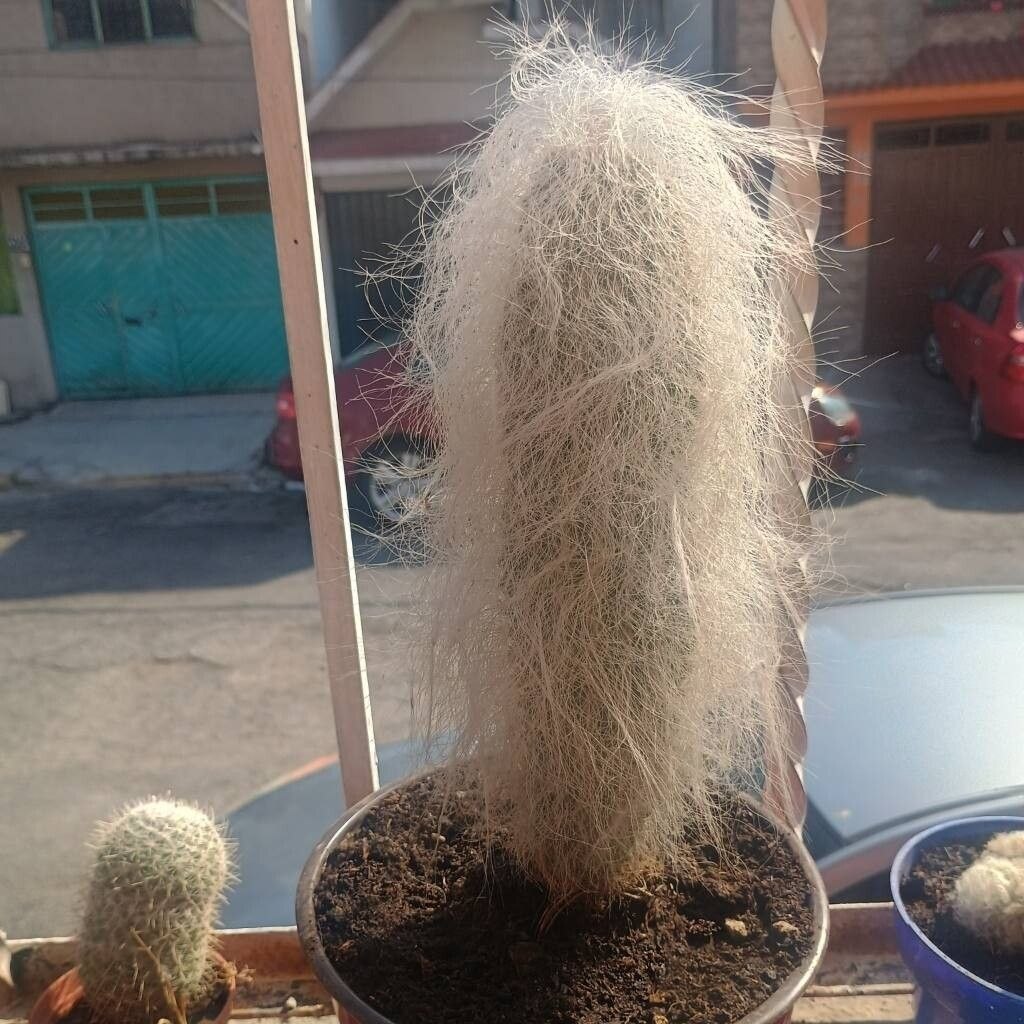
This record is limited to Cephalocereus senilis. The old-man common name refers here to the long white radial spines covering its columnar stems.
Kew recognizes Cephalocereus senilis as accepted. The white hairs are modified spines, not soft fur, and sharp yellow central spines sit underneath.
What non-toxic means
ASPCA's exact-species record supports non-toxic classifications for cats and dogs. That classification addresses toxicity, not puncture or eye injury.
Keep the cactus where pets cannot brush against, paw at, or bite its spines.
If your pet chewed it
Move the cactus safely and look for visible injury without forcing the mouth open. Seek veterinary care for an eye exposure, embedded spines, bleeding, swelling, or ongoing pain.
For swallowed plant material without injury, monitor for persistent vomiting or diarrhea and contact a veterinarian if signs continue.
How to recognize Old Man Cactus
Old man cactus forms erect columns covered in long white hair-like radial spines. Shorter, sharper yellow central spines remain beneath the white covering.
Indoor plants commonly reach three to four feet, while wild specimens can become much taller. Flowering indoors may take many years.
Care and placement
NC State Extension recommends bright light with some direct sun, a freely draining mix, and thorough watering followed by drying before the next watering.
Overwatering, especially in cool periods, invites rot. Its eventual indoor height makes it a floor plant rather than a tabletop specimen.
Evidence and sources
- Royal Botanic Gardens, Kew — Plants of the World Online — Cephalocereus senilisKew marks Cephalocereus senilis as an accepted species.
- ASPCA Animal Poison Control — Old Man CactusExact-species ASPCA record covering cats and dogs.
- NC State Extension — Old Man Cactus — Cephalocereus senilisInstitutional horticultural source used for the care and approved discovery-trait statements.