
Plant safety record
Manila Palm
Adonidia merrillii
ASPCA's current exact-identity record lists Adonidia merrillii as non-toxic to cats and dogs. Kew recognizes Veitchia merrillii as a homotypic synonym, but PawPlants relies on the accepted-name ASPCA record.
Cats
NON-TOXIC
ASPCA classifies Adonidia merrillii as non-toxic to cats. The conclusion is specific to the correctly identified palm.
Dogs
NON-TOXIC
ASPCA classifies Adonidia merrillii as non-toxic to dogs. The conclusion is specific to the correctly identified palm.
Quick answer
A small chew from correctly identified Adonidia merrillii is not expected to cause characteristic plant poisoning. Remove access and monitor for persistent digestive signs.
Contact a veterinarian if symptoms continue, a large amount was eaten, or the palm identity is uncertain.
Plant identity
Approved alternate names for this record: Christmas Palm. These names are searchable only within the exact botanical scope described below.
This route covers Adonidia merrillii, also called Christmas palm. Veitchia merrillii is retained only as a validated synonym rather than as the safety-evidence dependency.
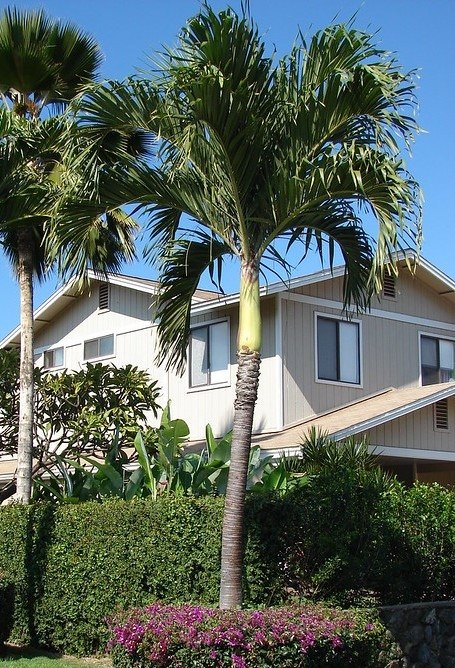
The palm has a slender solitary trunk and arching pinnate leaves. Nursery pots may contain several separate palms and appear multi-stemmed.
What non-toxic means
ASPCA directly lists the accepted name Adonidia merrillii as non-toxic to cats and dogs. That exact current entry is the primary safety source.
Non-toxic does not make fallen material, potting mix, fertilizer, or pest treatments appropriate for pets to eat.
If your pet chewed it
Remove loose material and move the container out of reach. Do not induce vomiting or use a home remedy unless a veterinary professional recommends it.
Monitor for persistent vomiting, diarrhea, coughing, or unusual behavior and seek advice if symptoms continue.
How to recognize Manila Palm
Manila palm has a smooth slender trunk, a green crownshaft, and recurved, arching feather-like leaves. Cream flowers are followed by fruit that ripens red.
A cluster in one pot is usually several solitary palms rather than one naturally branching specimen.
Care and placement
NC State Extension describes full sun to partial shade, regular irrigation, and strong sensitivity to frost and freezing. Containers allow winter protection in colder climates.
It can become a very large houseplant: the profile spans about three to twenty-five feet overall. Plan substantial floor space and vertical clearance.
Evidence and sources
- Royal Botanic Gardens, Kew — Plants of the World Online — Adonidia merrilliiKew marks Adonidia merrillii as an accepted species and Veitchia merrillii as a homotypic synonym.
- ASPCA Animal Poison Control — Christmas PalmCurrent exact accepted-name ASPCA record is the primary safety evidence. The older Veitchia merrillii ASPCA path is not relied upon.
- NC State Extension — Manila Palm — Adonidia merrilliiInstitutional horticultural source used for the care and approved discovery-trait statements.