
Plant safety record
Madagascar Jasmine
Stephanotis floribunda
ASPCA lists Stephanotis floribunda as non-toxic to cats and dogs. That conclusion is species-specific and does not merge Madagascar jasmine with the existing Star Jasmine record.
Cats
NON-TOXIC
ASPCA classifies Stephanotis floribunda as non-toxic to cats. Plant material and growing products can still cause nonspecific irritation or stomach upset.
Dogs
NON-TOXIC
ASPCA classifies Stephanotis floribunda as non-toxic to dogs. Plant material and growing products can still cause nonspecific irritation or stomach upset.
Quick answer
A small chew from correctly identified Stephanotis floribunda is not expected to cause characteristic plant poisoning. Remove access and monitor for persistent digestive signs.
Contact a veterinarian if symptoms continue, a large amount was eaten, or the plant identity is uncertain.
Plant identity
This record covers Stephanotis floribunda. Madagascar jasmine is not Trachelospermum jasminoides, the separate species represented by PawPlants' Star Jasmine route.
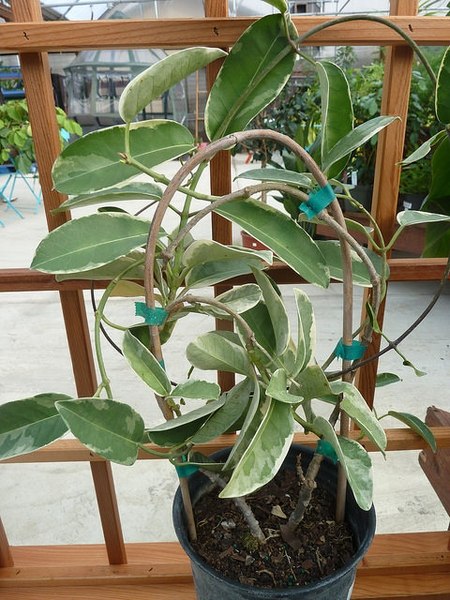
It is an evergreen woody twining vine with paired glossy leaves and fragrant white, waxy tubular flowers. Kew recognizes Stephanotis floribunda as accepted.
What non-toxic means
ASPCA directly lists the exact species as non-toxic to cats and dogs. Non-toxic is an evidence classification, not a guarantee that chewing plant material cannot cause digestive upset.
The conclusion does not apply to unrelated plants that share jasmine in a common name.
If your pet chewed it
Remove loose plant material and prevent more chewing. Do not induce vomiting or give a home remedy unless a veterinary professional directs it.
Monitor for persistent vomiting, diarrhea, coughing, trouble swallowing, or unusual behavior and seek veterinary advice when signs continue.
How to recognize Madagascar Jasmine
Madagascar jasmine has woody twining stems, thick opposite leaves, and clusters of intensely fragrant, white waxy flowers.
Vines can exceed twenty feet and need support. Its Stephanotis floribunda label distinguishes it from Star Jasmine and true jasmines.
Care and placement
NC State Extension recommends strong light, high humidity and ample water during active summer growth, with a well-drained medium and trellis support.
Reduce watering during cooler rest periods. Overwatering can cause root rot, and a hanging basket is appropriate when the twining growth is supported and kept out of reach.
Evidence and sources
- Royal Botanic Gardens, Kew — Plants of the World Online — Stephanotis floribundaKew marks Stephanotis floribunda as an accepted species.
- ASPCA Animal Poison Control — Madagascar JasmineExact-species ASPCA record covering cats and dogs; no conclusion is transferred to Star Jasmine or other plants called jasmine.
- NC State Extension — Stephanotis floribundaInstitutional horticultural source used for the care and approved discovery-trait statements.