
Plant safety record
Living Rock Cactus
Pleiospilos bolusii
ASPCA lists Pleiospilos bolusii as non-toxic to cats and dogs. Living-rock terminology is shared by multiple succulents, so this conclusion depends on the exact scientific identity.
Cats
NON-TOXIC
ASPCA classifies Pleiospilos bolusii as non-toxic to cats. Potting grit and care products remain separate concerns.
Dogs
NON-TOXIC
ASPCA classifies Pleiospilos bolusii as non-toxic to dogs. Potting grit and care products remain separate concerns.
Quick answer
A small chew from correctly identified Pleiospilos bolusii is not expected to cause characteristic plant poisoning. Remove access and monitor for persistent digestive signs.
Contact a veterinarian if symptoms continue, a large amount was eaten, or the identity is uncertain.
Plant identity
Approved alternate names for this record: African Living Rock, Mimicry Plant. These names are searchable only within the exact botanical scope described below.
This route covers Pleiospilos bolusii. African living rock and mimicry plant are retained as qualified aliases, not as a conclusion about every stone-like succulent.
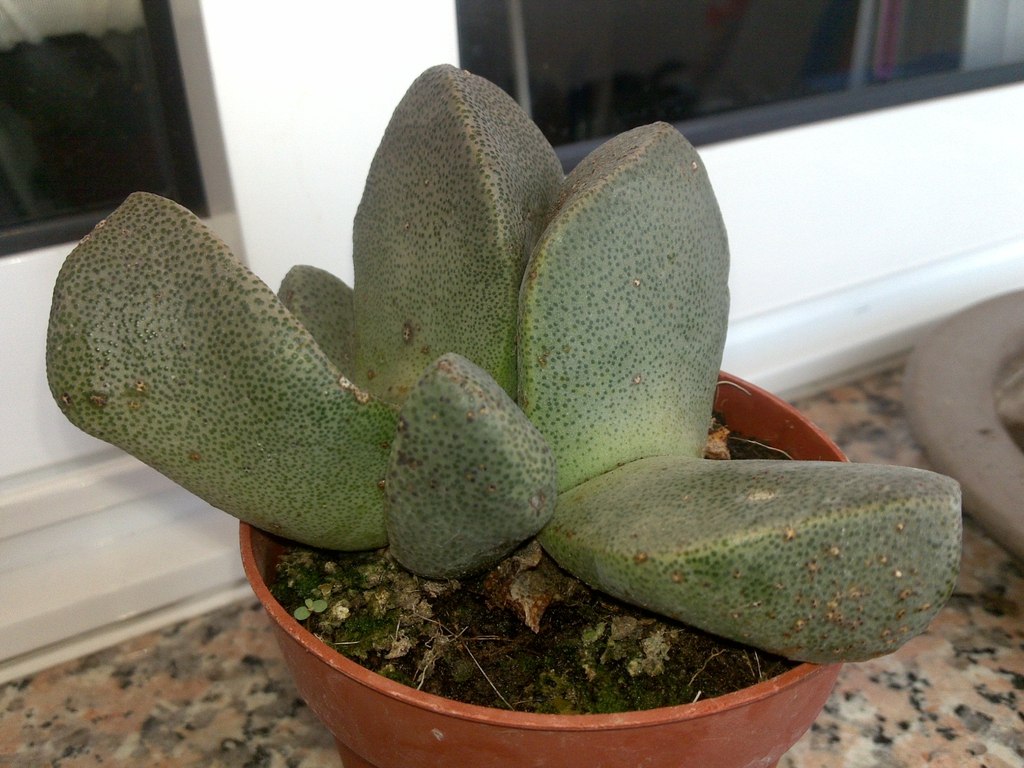
The plant is a tiny stemless succulent with pairs of thick, triangular, gray-green to brown spotted leaves. Kew recognizes Pleiospilos bolusii as accepted.
What non-toxic means
ASPCA directly lists the exact species as non-toxic to cats and dogs. The result cannot be generalized to another plant sold as a living stone or living rock.
Non-toxic does not mean that foliage, gritty media, fertilizer, or treatments are intended for ingestion.
If your pet chewed it
Remove loose material and keep the container out of reach. Do not induce vomiting or give a home remedy unless a veterinary professional recommends it.
Monitor for persistent vomiting, diarrhea, coughing, or unusual behavior and seek veterinary advice when signs continue.
How to recognize Living Rock Cactus
Pleiospilos bolusii stays about one to three inches tall and up to six inches wide. Its paired stone-like leaves are thick, triangular, and finely spotted.
Yellow to orange daisy-like flowers can appear in late summer or early fall, helping separate it from some other mimicry succulents.
Care and placement
NC State Extension recommends bright indirect light with morning sun tolerated, a very well-drained mix, and restrained watering.
The plant is drought tolerant and vulnerable to overwatering. Its tiny scale suits a tabletop container, but gritty media should remain inaccessible to pets.
Evidence and sources
- Royal Botanic Gardens, Kew — Plants of the World Online — Pleiospilos bolusiiKew marks Pleiospilos bolusii as an accepted species.
- ASPCA Animal Poison Control — Living Rock CactusExact-species ASPCA record covering cats and dogs; alternate names remain bound to the scientific subject.
- NC State Extension — Living Rock Cactus — Pleiospilos bolusiiInstitutional horticultural source used for the care and approved discovery-trait statements.