
Plant safety record
Japanese Pittosporum
Pittosporum tobira
ASPCA lists Pittosporum tobira as non-toxic to cats and dogs. Mock orange and Australian laurel are shared common names, so this conclusion depends on the scientific identity.

Cats
NON-TOXIC
ASPCA classifies Pittosporum tobira as non-toxic to cats. Common-name lookalikes are not covered by this exact-species conclusion.
Dogs
NON-TOXIC
ASPCA classifies Pittosporum tobira as non-toxic to dogs. Chewing a large amount or ingesting garden products can still cause separate concerns.
Quick answer
A small chew from a correctly identified Pittosporum tobira is not expected to cause characteristic plant poisoning. Remove access and monitor for persistent digestive signs.
Contact a veterinarian if symptoms continue, a large amount was eaten, or the plant was identified only as mock orange or laurel.
Plant identity
Approved alternate names for this record: Australian Laurel, Mock Orange. These names are searchable only within the exact botanical scope described below.
This page covers Pittosporum tobira. Australian laurel and mock orange are retained as qualified aliases, not as proof that similarly named plants share its safety record.
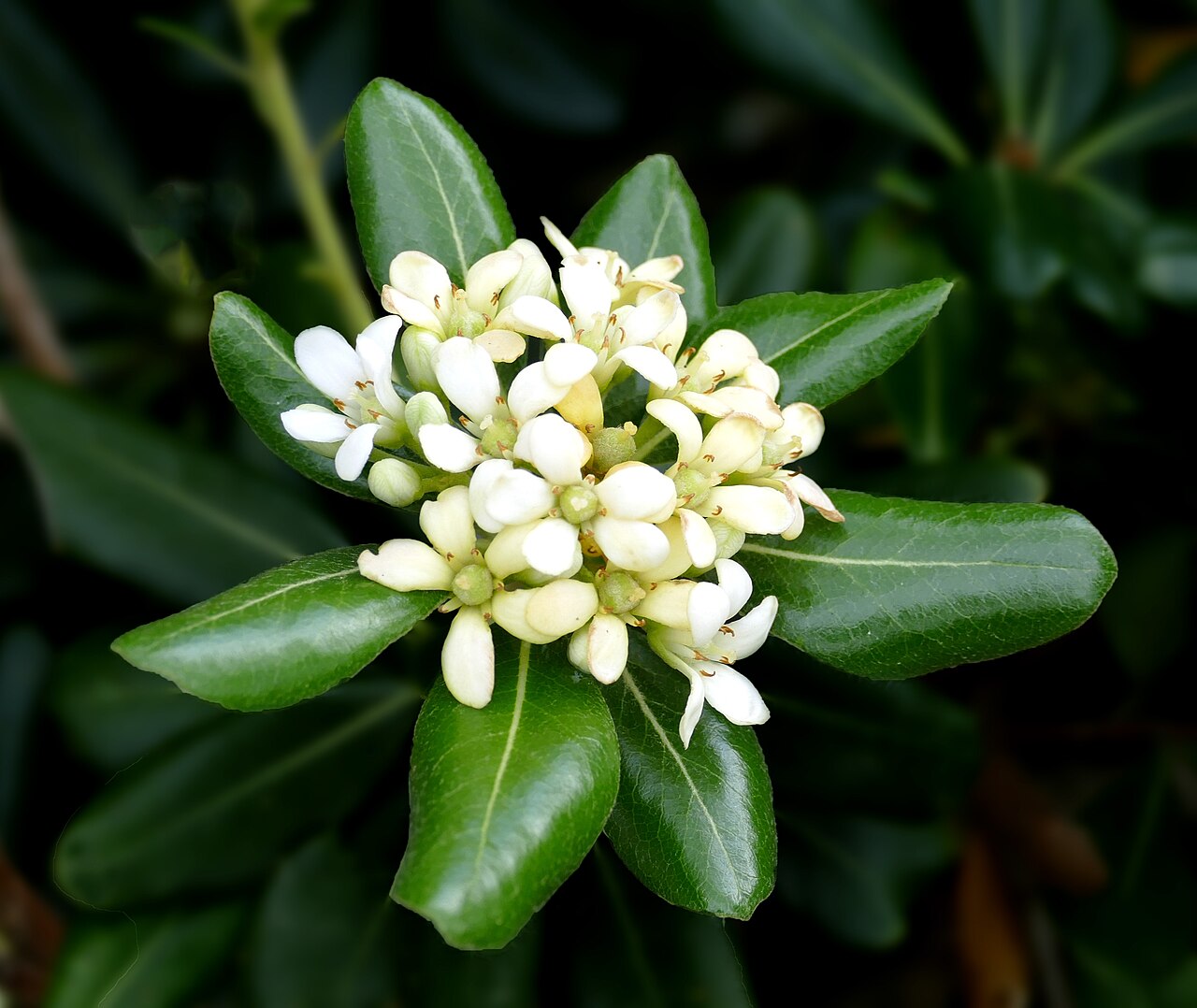
Japanese pittosporum is a dense evergreen shrub with leathery spoon-shaped leaves clustered near twig tips and fragrant cream-colored flowers. Kew recognizes Pittosporum tobira as accepted.
What non-toxic means
ASPCA directly lists Pittosporum tobira as non-toxic to cats and dogs. The same-subject evidence supports this route without making a genus-wide or common-name-wide claim.
Non-toxic does not mean edible. Leaves, flowers, soil, fertilizer, and pest treatments can still lead to nonspecific illness or a separate exposure.
If your pet chewed it
Remove plant pieces and prevent more chewing. Do not induce vomiting or give a home remedy unless a veterinary professional tells you to do so.
Watch for ongoing vomiting, diarrhea, coughing, unusual tiredness, or evidence that a different plant was involved. Contact a veterinarian when signs persist or identification is uncertain.
How to recognize Japanese Pittosporum
Pittosporum tobira has dense, glossy, leathery leaves that are broader near the tip. Fragrant five-petaled flowers open white and age toward cream or yellow.
The shrub later forms small capsules with red seeds. Confirm the Pittosporum tobira label because mock orange is also used for plants in other genera.
Care and placement
NC State Extension describes a durable shrub for full sun to heavy shade in well-drained soil. It tolerates pruning, heat, drought after establishment, and salt spray.
Where winters are too cold, it can grow in a container and be overwintered in a well-lit indoor area. Mature plants can reach eight to thirteen feet, so allow floor space and prune with the available room in mind.
Evidence and sources
- Royal Botanic Gardens, Kew — Plants of the World Online — Pittosporum tobira (Thunb.) W.T.AitonKew marks Pittosporum tobira as an accepted species and lists Japanese pittosporum as an English common name.
- ASPCA Animal Poison Control — Japanese PittosporumExact-species ASPCA record covering cats and dogs; broad aliases never establish identity by themselves.
- NC State Extension — Pittosporum — Pittosporum tobiraInstitutional horticultural source used for the care and approved discovery-trait statements.