
Plant safety record
Japanese Holly Fern
Cyrtomium falcatum
ASPCA lists the correctly identified Japanese holly fern, Cyrtomium falcatum, as non-toxic to cats and dogs. The common name holly fern is shared, so the scientific identity is important.

Cats
NON-TOXIC
ASPCA classifies Cyrtomium falcatum as non-toxic to cats. The conclusion does not automatically extend to every plant called holly fern.
Dogs
NON-TOXIC
ASPCA classifies Cyrtomium falcatum as non-toxic to dogs. Eating fronds or potting material can still cause nonspecific digestive irritation.
Quick answer
A small nibble from a correctly identified Cyrtomium falcatum is not expected to cause characteristic plant poisoning. Remove access and monitor for persistent stomach upset.
Ask a veterinarian for advice if symptoms repeat, a large amount was eaten, or the plant could be another fern.
Plant identity
Approved alternate names for this record: Fishtail Fern, Holly Fern. These names are searchable only within the exact botanical scope described below.
This record covers Cyrtomium falcatum. Fishtail fern and holly fern are retained aliases for this species, but those common names can also be used for other plants.
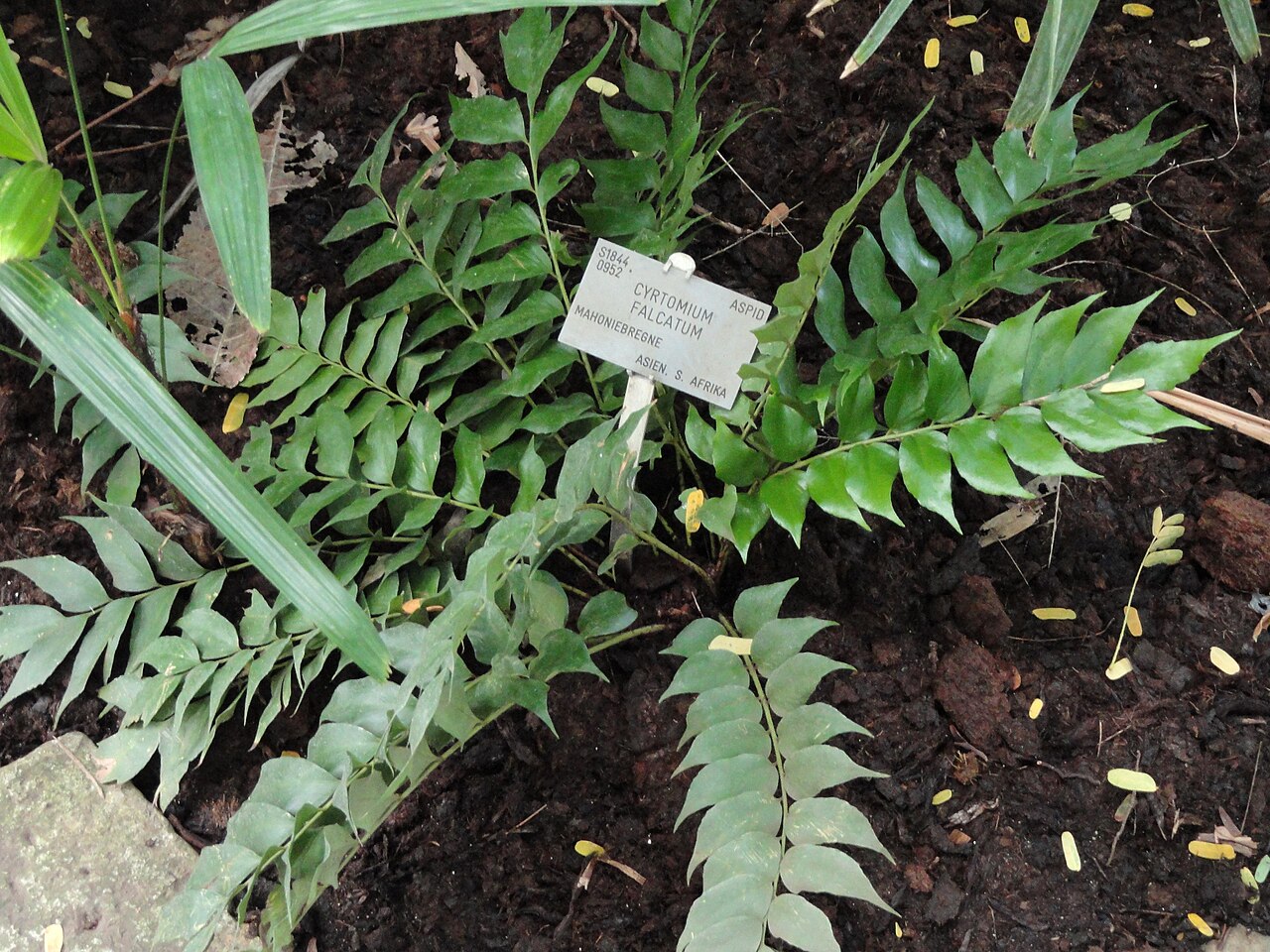
The exact species forms a tuft of glossy, leathery fronds with broad sickle-shaped leaflets. The retained Kew record establishes its accepted scientific identity.
What non-toxic means
ASPCA directly names Cyrtomium falcatum for both cat and dog non-toxicity. That evidence supports this route only when the fern has been identified correctly.
Non-toxic describes the absence of the characteristic poison concern in the source; it does not promise that chewing will never cause vomiting or diarrhea.
If your pet chewed it
Take away loose frond pieces and check whether the pet also reached soil, fertilizer, or pest-control products. Do not induce vomiting without veterinary direction.
Observe for repeated digestive signs, mouth discomfort, weakness, or a possible identity mix-up. Contact a veterinarian when symptoms persist or the exposure is unclear.
How to recognize Japanese Holly Fern
Japanese holly fern has stiff, arching fronds rather than finely divided lacy foliage. Its glossy leaflets are broadly oval to sickle-shaped and may have toothed edges.
Spores form in round groups on the undersides of mature fronds. A nursery label naming Cyrtomium falcatum helps distinguish it from other holly ferns.
Care and placement
NC State Extension recommends a shaded position and moist, humus-rich, well-drained soil for Cyrtomium falcatum. Avoid letting a container stand waterlogged, which can encourage root problems.
The species forms a clump roughly one and a half to two feet tall and is listed for containers and hanging baskets. Remove damaged fronds rather than repeatedly trimming healthy growth.
Evidence and sources
- Royal Botanic Gardens, Kew — Plants of the World Online — Cyrtomium falcatum (L.f.) C.PreslKew marks Cyrtomium falcatum as an accepted species.
- ASPCA Animal Poison Control — Japanese Holly FernExact-species ASPCA record covering cats and dogs.
- NC State Extension — Japanese Holly Fern — Cyrtomium falcatumInstitutional horticultural source used for the care and approved discovery-trait statements.