
Plant safety record
Honeysuckle Fuchsia
Fuchsia triphylla
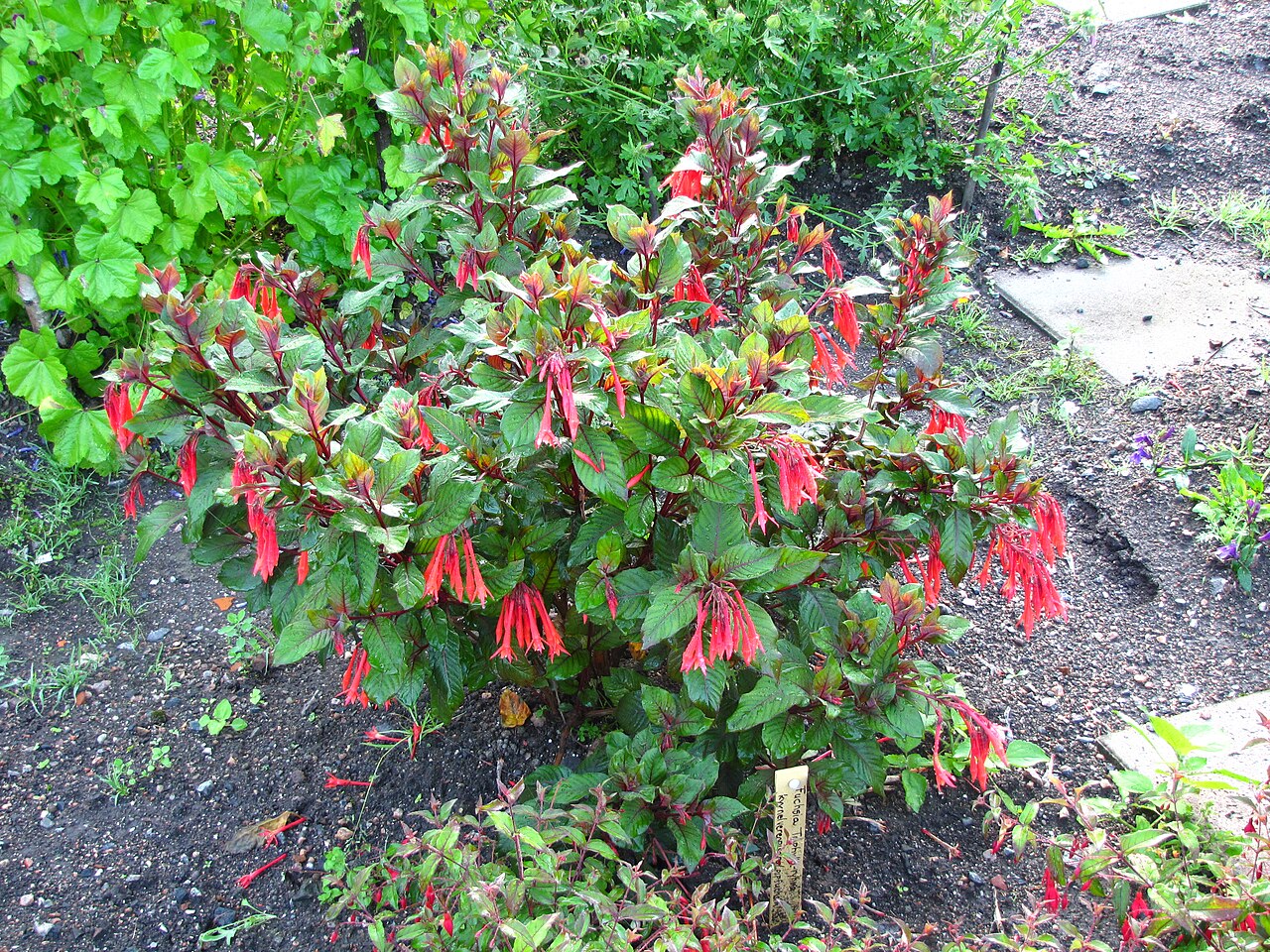
ASPCA lists Fuchsia triphylla, the honeysuckle fuchsia covered here, as non-toxic to cats and dogs. Its long tubular flowers and whorled leaves help distinguish this species.
_Turun_kasvitieteellinen_puutarha.JPG)
Cats
NON-TOXIC
ASPCA classifies Fuchsia triphylla as non-toxic to cats. Fallen flowers and leaves can still cause nonspecific stomach upset if eaten.
Dogs
NON-TOXIC
ASPCA classifies Fuchsia triphylla as non-toxic to dogs. Container soil, fertilizer, and pest treatments are outside that classification.
Quick answer
A small nibble from a correctly identified Fuchsia triphylla is not expected to cause characteristic plant poisoning. Remove access and monitor for persistent digestive signs.
Contact a veterinarian if symptoms continue, a large amount was eaten, or the plant could be a different species.
Plant identity
This page covers Fuchsia triphylla. The conclusion is not a genus-wide claim about every fuchsia hybrid or every unrelated plant with honeysuckle in its name.
The species has leaves commonly arranged in whorls of three and produces drooping, narrow tubular red-orange to red-purple flowers. Kew recognizes Fuchsia triphylla as an accepted species.
What non-toxic means
The ASPCA record names Fuchsia triphylla and lists it as non-toxic to both cats and dogs. That same-subject evidence is the basis for the two animal cards.
Non-toxic does not mean risk-free under every circumstance. Repeated plant chewing or eating a large amount can still produce nonspecific digestive signs.
If your pet chewed it
Move the basket or container, clear fallen plant material, and check whether the pet reached any potting or treatment product. Do not induce vomiting without veterinary direction.
Observe appetite, behavior, and digestion. Contact a veterinarian for repeated vomiting or diarrhea, an uncertain identification, or any sign that the pet is not acting normally.
How to recognize Honeysuckle Fuchsia
Honeysuckle fuchsia is a small woody perennial with oval toothed leaves, often showing a reddish underside. Its flowers are long, drooping tubes with prominent stamens.
The common name firecracker fuchsia may also appear in horticultural references, but PawPlants retains only the approved public name and exact scientific identity.
Care and placement
NC State Extension recommends fertile, humus-rich, moist but well-drained soil and protection from hot direct sun. Cool, moist conditions support the long flowering season.
The plant commonly grows one to two feet tall and can be used in containers, window boxes, or hanging baskets. In cold climates it may be overwintered indoors or replaced as an annual.
Evidence and sources
- Royal Botanic Gardens, Kew — Plants of the World Online — Fuchsia triphylla L.Kew marks Fuchsia triphylla as an accepted species.
- ASPCA Animal Poison Control — Honeysuckle FuchsiaExact-species ASPCA record covering cats and dogs.
- NC State Extension — Firecracker Fuchsia — Fuchsia triphyllaInstitutional horticultural source used for the care and approved discovery-trait statements.