
Plant safety record
Flame of the Woods
Ixora coccinea
ASPCA lists Ixora coccinea as non-toxic to cats and dogs. Because names such as iron tree are shared by unrelated plants, this conclusion requires the exact scientific identity.
.jpg)
Cats
NON-TOXIC
ASPCA classifies Ixora coccinea as non-toxic to cats. Fallen flowers and leaves can still cause nonspecific stomach upset if eaten.
Dogs
NON-TOXIC
ASPCA classifies Ixora coccinea as non-toxic to dogs. Fertilizer, pesticides, and container materials remain separate exposure concerns.
Quick answer
A small chew from a correctly identified Ixora coccinea is not expected to cause characteristic plant poisoning. Remove access and observe for persistent digestive signs.
Contact a veterinarian if symptoms continue, a large amount was eaten, or the plant was identified only by a broad common name.
Plant identity
Approved alternate names for this record: Maui Sunset, Iron Tree. These names are searchable only within the exact botanical scope described below.
This record covers Ixora coccinea. Flame of the woods is the preferred public name here; Maui Sunset and Iron Tree are retained only as identity-qualified search aliases.
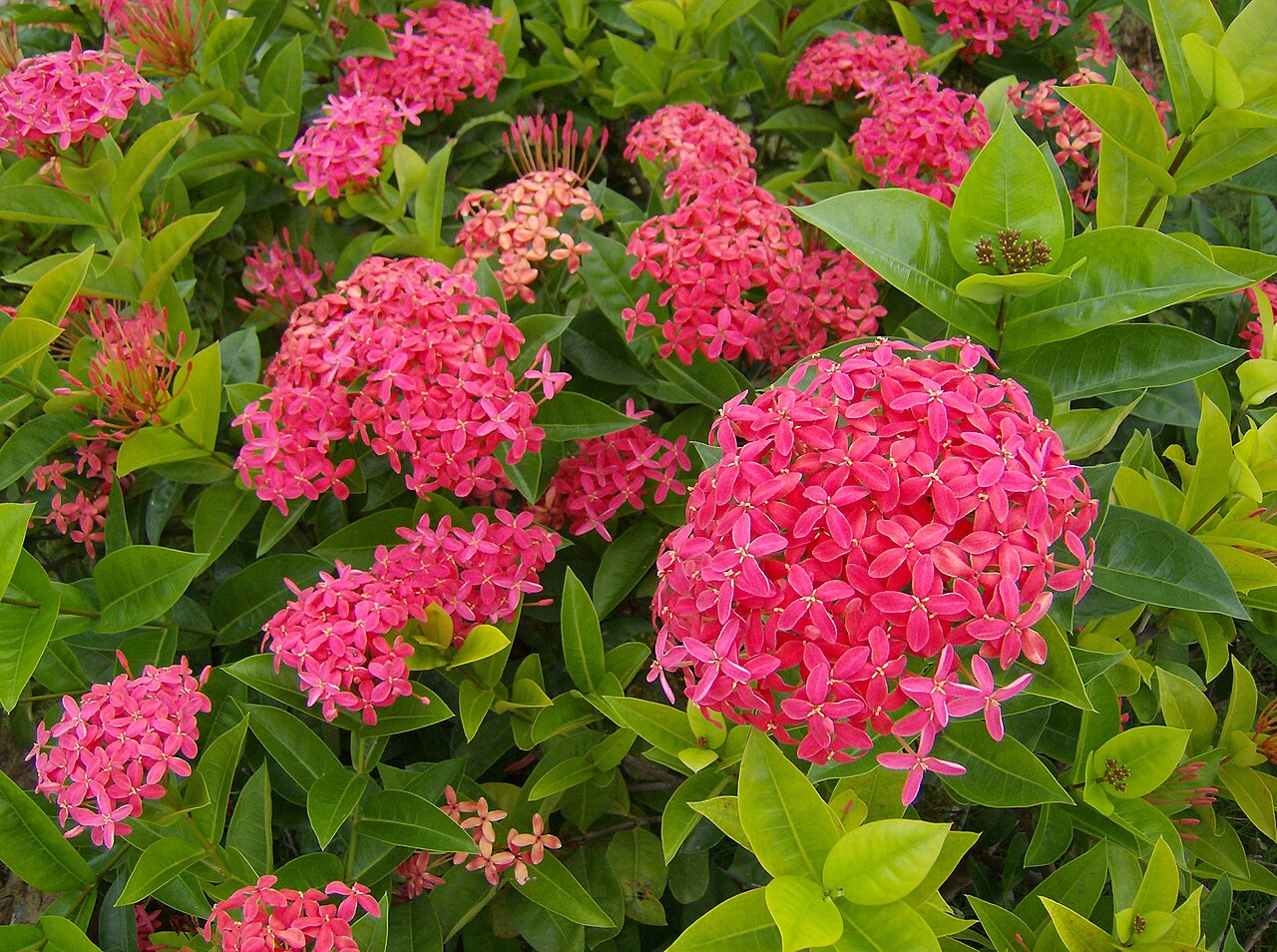
The species is a rounded evergreen shrub with opposite glossy leaves and dense clusters of four-petaled tubular red flowers. Kew recognizes Ixora coccinea as accepted.
What non-toxic means
ASPCA names Ixora coccinea and lists the exact species as non-toxic to cats and dogs. An alias alone cannot extend that conclusion to an unrelated plant.
Non-toxic does not mean that repeated chewing is harmless. Individual pets can develop mild digestive upset after eating plant material.
If your pet chewed it
Clear loose flowers and leaves and move the plant out of reach. Do not induce vomiting or offer a home treatment unless a veterinary professional recommends it.
Monitor appetite, comfort, and digestion. Call a veterinarian for repeated symptoms, a large exposure, or any uncertainty about the plant's identity.
How to recognize Flame of the Woods
Ixora coccinea has leathery, opposite, dark-green leaves and rounded clusters of narrow tubular flowers, most characteristically scarlet red. Young foliage may have a bronze cast.
The exact scientific label matters because broad aliases can refer to other woody plants that do not share this evidence record.
Care and placement
NC State Extension describes a tropical shrub that prefers full sun, moist well-drained acidic soil, and temperatures above about 50°F. Alkaline conditions can cause yellowing foliage.
Container plants can be moved indoors for winter in colder climates and need a bright sunny position. The shrub commonly reaches four to six feet, so allow space or prune in late winter.
Evidence and sources
- Royal Botanic Gardens, Kew — Plants of the World Online — Ixora coccinea L.Kew marks Ixora coccinea as an accepted species.
- ASPCA Animal Poison Control — Flame of the WoodsExact-species ASPCA record covering cats and dogs; the broad Iron Tree alias never establishes identity by itself.
- NC State Extension — Ixora coccineaInstitutional horticultural source used for the care and approved discovery-trait statements.