
Plant safety record
Croton
Codiaeum variegatum
Croton can irritate the mouth and digestive tract of cats and dogs. Chewing may cause drooling, vomiting, or diarrhea, and the clear sap released from damaged leaves or stems may irritate skin or eyes.

Cats
TOXIC
A cat may drool, vomit, or develop diarrhea after chewing croton. Sap on the coat can also be licked during grooming.
Dogs
TOXIC
A dog may develop drooling, vomiting, diarrhea, or mild mouth irritation. Sap contact may irritate skin or eyes.
Quick answer
Take the plant away, collect loose pieces, and prevent your pet from licking sap from the coat or paws. Call your veterinarian if symptoms begin or more than a small amount may have been chewed.
Eye exposure, repeated vomiting, marked diarrhea, unusual weakness, or persistent pain deserves prompt veterinary attention.
Plant identity
Codiaeum variegatum
What happens after chewing
Croton is generally described as an irritant rather than a plant that causes a characteristic organ-failure syndrome. Mouth and stomach irritation can lead to drooling, vomiting, or diarrhea.
The severity depends on the amount, the plant part, and the individual pet. Do not assume that a brightly colored leaf is harmless because the expected effects are often mild.
Sap on skin, fur, or eyes
Broken leaves and stems release clear sap. Skin contact may cause redness or discomfort, and eye contact can be painful.
Prevent grooming and rinse visible sap from fur or skin with plain water. For eye exposure, persistent redness, squinting, or pawing at the eye requires veterinary guidance.
What to do right now
Move the plant out of reach and save a label or take photographs. Do not make your pet vomit or apply a cream, medication, or home remedy unless a veterinary professional directs you.
Call your veterinarian or an animal poison-control service when the amount is uncertain, symptoms are more than mild, or the plant identity is unclear.
How to recognize croton
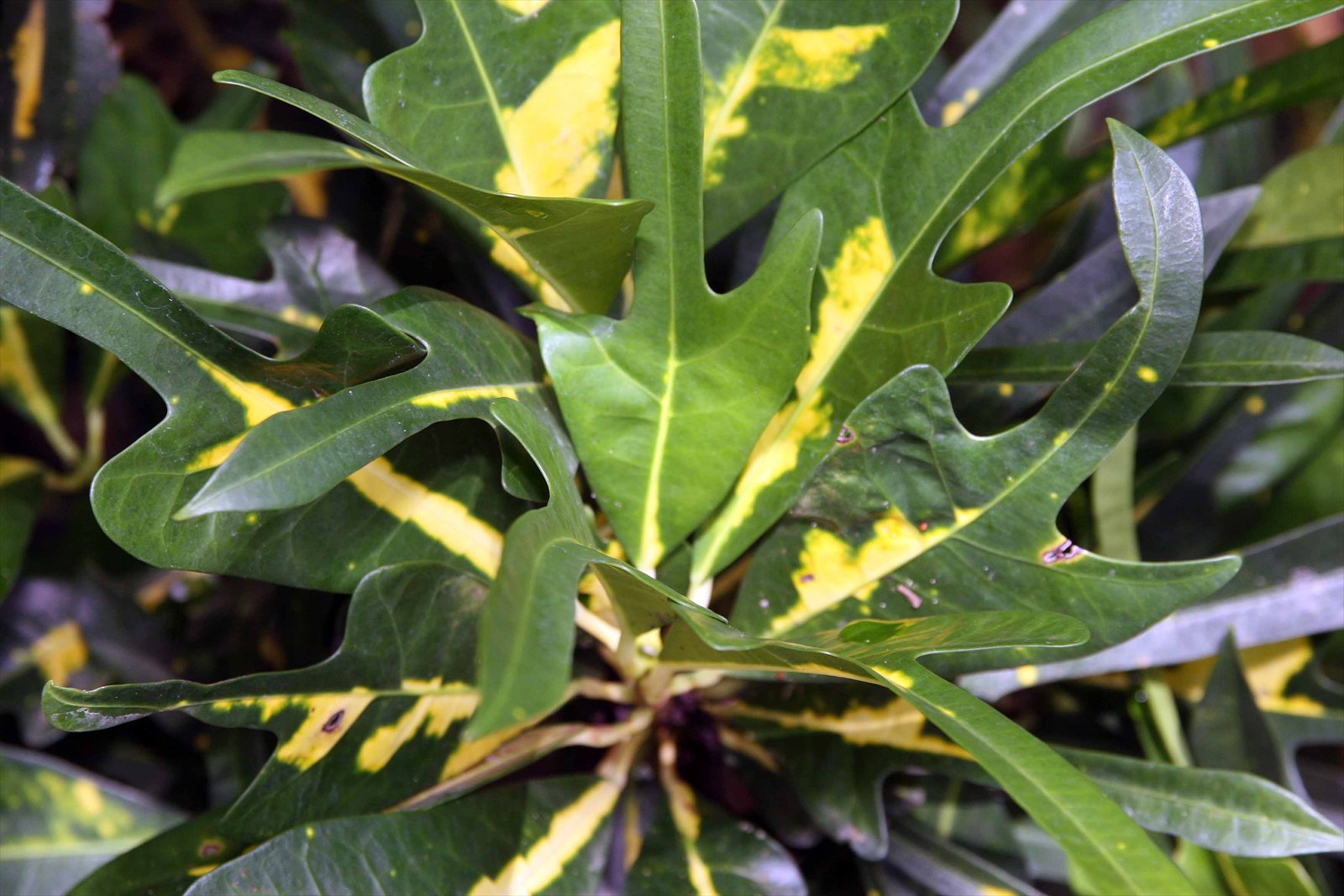
Croton is a woody evergreen houseplant grown for glossy, leathery leaves. Depending on the cultivar, leaves may be broad, narrow, lobed, twisted, or crinkled.
The foliage may combine green, yellow, orange, red, pink, bronze, or purple in spots, veins, stripes, or large patches. Damaged tissue can release clear sap.
The common name can mislead
This page applies to Codiaeum variegatum, the familiar ornamental houseplant. Croton is also the name of a separate botanical genus containing many other plants.
Use the scientific name or a clear nursery label rather than applying this page to every plant called croton.
Preventing another exposure
Place the plant where leaves cannot brush against a pet's walking route and where fallen foliage is easy to notice. Wear gloves if pruning causes skin irritation.
Bag cuttings before disposal and wash sap from tools and surfaces that pets may lick.
Evidence and sources
- Pet Poison Helpline — CrotonCodiaeum variegatum may cause mild oral and gastrointestinal irritation with drooling, vomiting, or diarrhea; sap may irritate skin.
- NC State Extension — CrotonCroton is a woody evergreen houseplant with glossy leathery leaves in varied shapes and colors; broken tissue releases clear sap.