
Plant safety record
Common Camellia
Camellia japonica
ASPCA lists Camellia japonica as non-toxic to cats and dogs. This conclusion is species-specific and should not be generalized from the short label camellia alone.

Cats
NON-TOXIC
ASPCA classifies Camellia japonica as non-toxic to cats. Fallen petals and leaves should still be cleared if a cat repeatedly eats them.
Dogs
NON-TOXIC
ASPCA classifies Camellia japonica as non-toxic to dogs. Potting amendments and garden treatments remain separate exposure concerns.
Quick answer
A small chew from a correctly identified Camellia japonica is not expected to cause characteristic plant poisoning. Remove access and watch for persistent digestive upset.
Contact a veterinarian if signs continue, a large amount was eaten, or the plant is not confidently identified as Camellia japonica.
Plant identity
Approved alternate names for this record: Camellia, Peony Camellia. These names are searchable only within the exact botanical scope described below.
This record is specifically Camellia japonica. Camellia is also a genus containing many species, so a common-name label by itself is not enough to transfer this safety conclusion.
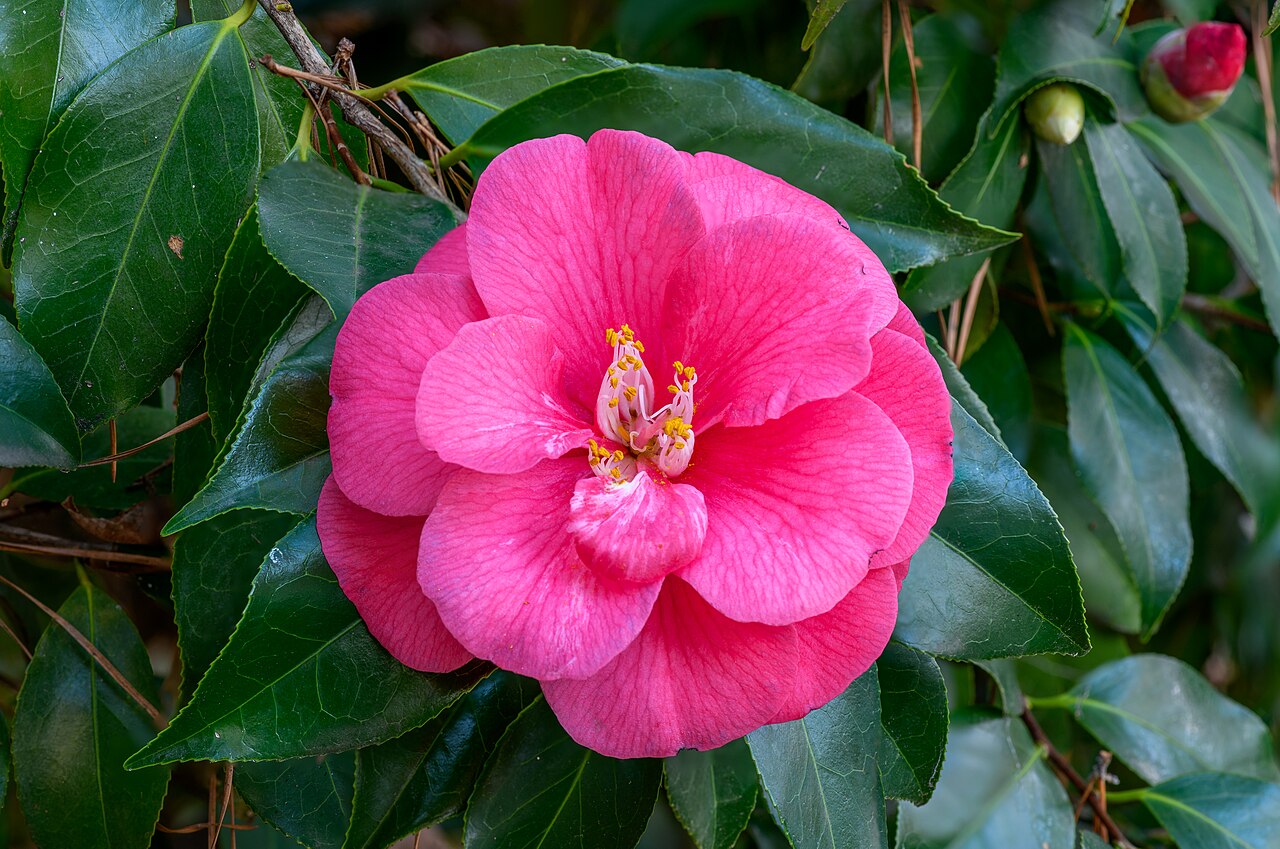
Common camellia is a glossy-leaved evergreen shrub or small tree. Its flowers can be white, pink, red, or variegated, and Kew recognizes Camellia japonica as the accepted species.
What non-toxic means
ASPCA's exact-species entry independently supports non-toxic classifications for cats and dogs. The evidence does not turn every plant called camellia into the same record.
A non-toxic classification does not mean leaves or flowers are intended as food. Plant material may still cause nonspecific stomach upset in an individual pet.
If your pet chewed it
Remove plant pieces and prevent further chewing. Do not induce vomiting or use a home remedy unless directed by a veterinary professional.
Watch for repeated vomiting, diarrhea, reduced appetite, or evidence that fertilizer or a different plant was involved. Seek veterinary advice when symptoms persist or identification is uncertain.
How to recognize Common Camellia
Camellia japonica has alternate, leathery, glossy dark-green leaves with finely toothed margins. Flowers are usually large and appear from winter into spring, depending on cultivar and climate.
Because other camellias can look similar, retain the scientific label or purchase record when the species-level safety conclusion matters.
Care and placement
NC State Extension recommends partial shade, protection from drying wind, and moist but well-drained acidic soil rich in organic matter. Avoid burying the root ball too deeply.
This slow-growing woody plant can mature into a sizable shrub or small tree. Prune only as needed after flowering so next season's buds are not removed.
Evidence and sources
- Royal Botanic Gardens, Kew — Plants of the World Online — Camellia japonica L.Kew marks Camellia japonica as an accepted species.
- ASPCA Animal Poison Control — Common CamelliaExact-species ASPCA record covering cats and dogs; the article scope must remain Camellia japonica, not the entire genus.
- NC State Extension — Camellia japonicaInstitutional horticultural source used for the care and approved discovery-trait statements.