
Plant safety record
China Rose
Rosa chinensis
“China rose” is not one dependable plant identity. It may refer to Rosa chinensis, a true rose, or be used for a hibiscus. Both specific examples covered by the sources below are listed as non-toxic to cats and dogs, but the name alone is too ambiguous to support a universal safety answer.

Cats
TOXIC
Do not rely on the words China rose alone. Confirm whether the plant is a true Rosa, a hibiscus, or something else before applying a safety conclusion.
Dogs
TOXIC
The common name is ambiguous. Identify the plant from its label, leaves, stems, and flowers before assuming it is non-toxic.
Quick answer
A correctly identified Rosa species is listed as non-toxic to cats and dogs. ASPCA also lists Hibiscus syriacus, called Rose of China, as non-toxic.
That does not make every plant sold or discussed as China rose automatically safe. If your pet is sick or the plant does not clearly match one of those identities, call your veterinarian and share photographs.
Plant identity
Scientific identity: Rosa chinensis
Why the name is ambiguous
China rose is a recognized common name for Rosa chinensis, one of the cultivated true roses. Very similar wording—Rose of China or Chinese hibiscus—is also used for hibiscus plants.
Common names shift between regions, nurseries, and websites. The scientific name on a tag is much more useful than the word rose by itself.
If it is a true rose
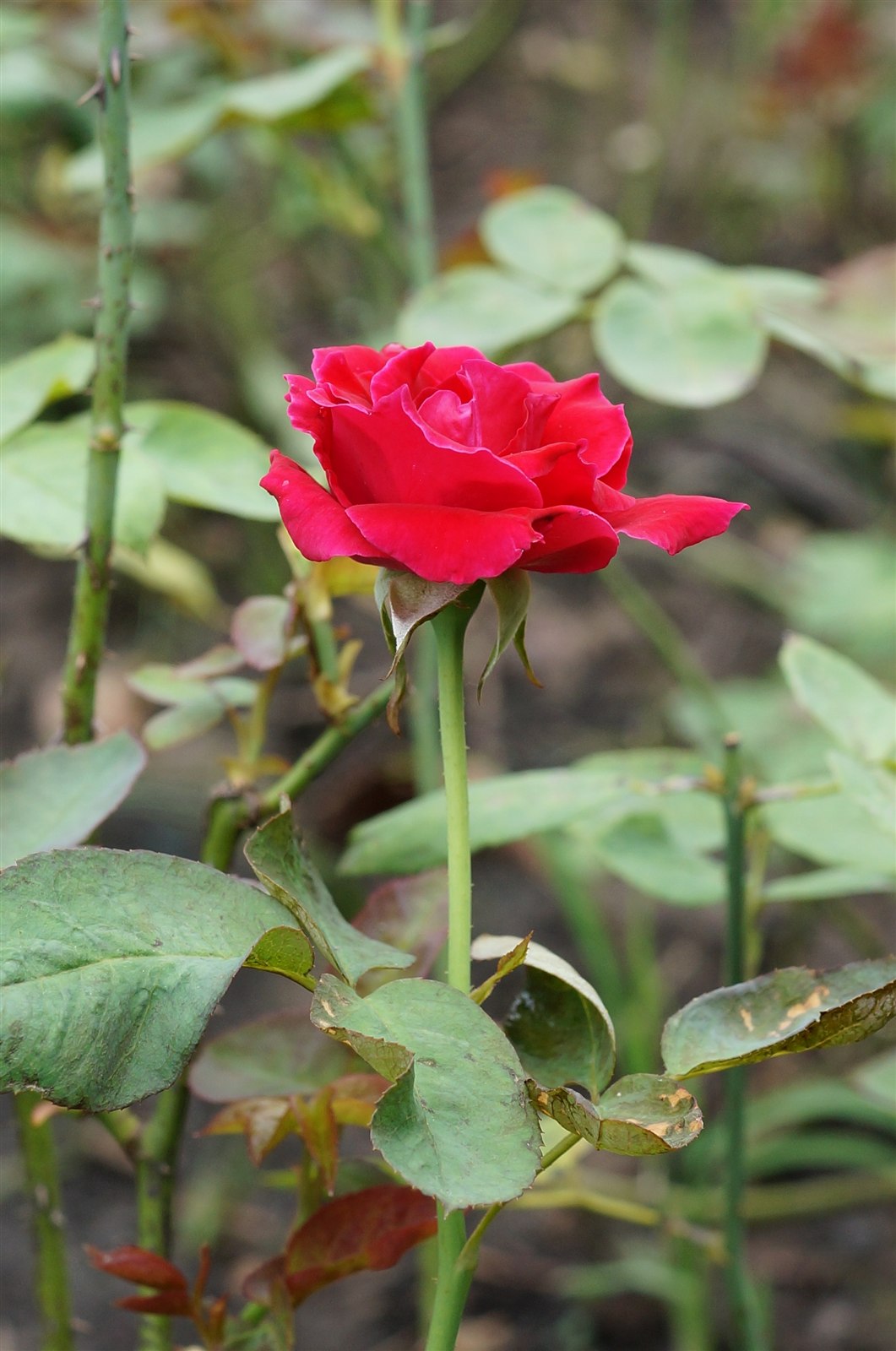
Rosa chinensis grows as a woody shrub with compound leaves, rose-shaped flowers, and stems that may carry prickles. ASPCA lists Rosa species as non-toxic to cats and dogs.
The plant may still cause ordinary stomach upset if eaten. Prickles can also injure the mouth, eyes, or paws even though they are not a plant toxin.
If it is a hibiscus
Hibiscus plants usually have broad individual leaves and large funnel-shaped flowers with a long central column. ASPCA lists Hibiscus syriacus under Rose of China as non-toxic to cats and dogs.
That listing should be applied to the identified plant, not to every unrelated plant that happens to share a similar common name.
What to do after chewing
Remove loose pieces and save the label or purchase record. Do not make your pet vomit or give a home remedy unless a veterinary professional directs you.
Call for repeated vomiting, significant diarrhea, mouth injury, eye injury, unusual weakness, or any exposure involving a plant that cannot be confidently identified.
How to photograph an unknown China rose
Take one photo of the entire plant, then close views of the leaves, the way leaves attach to the stem, flowers, buds, thorns or prickles, and any label.
Do not crop away the stem or leaf arrangement. Those details often separate a true rose from a hibiscus more reliably than flower color.
Why this page has no single photograph
Showing one plant as the face of China rose would make the other common-name use easier to misidentify. PawPlants keeps a truthful no-image state until the route has a narrower governed identity.
Use the visual plant finder as a starting point, but do not delay veterinary help while trying to achieve a perfect identification.
Evidence and sources
- NC State Extension — China RoseChina rose can specifically mean Rosa chinensis, a woody rose shrub with rose leaves, flowers, and prickles.
- ASPCA — RoseRosa species are listed as non-toxic to cats and dogs.
- ASPCA — Rose of ChinaASPCA lists Hibiscus syriacus, also called Rose of China, as non-toxic to cats and dogs.
- ASPCA — Toxic and Non-Toxic PlantsThe database is not all-inclusive; plant identity matters; any plant material may cause vomiting or gastrointestinal upset.