
Plant safety record
Chenille Plant
Acalypha hispida
ASPCA lists Acalypha hispida as toxic to cats and dogs. Diterpene esters are the cited toxic principle, with drooling, vomiting, and diarrhea among the reported signs.
Cats
TOXIC
ASPCA classifies Acalypha hispida as toxic to cats and reports drooling, vomiting, and diarrhea.
Dogs
TOXIC
ASPCA classifies Acalypha hispida as toxic to dogs and reports drooling, vomiting, and diarrhea.
Quick answer
Remove access to a chewed chenille plant and contact a veterinarian or animal poison-control service for advice based on the amount, timing, and symptoms.
Do not induce vomiting or give a home remedy unless a veterinary professional directs it.
Plant identity
This route covers Acalypha hispida. Generic foxtail is excluded as an alias because it is shared with unrelated grasses and other plants.
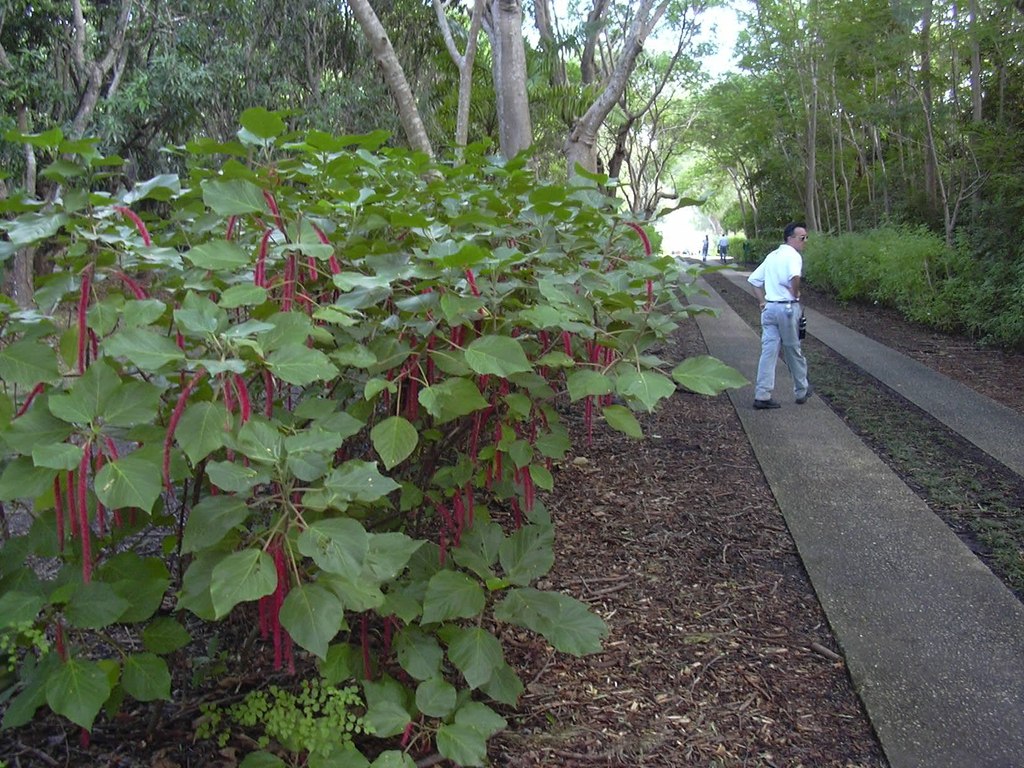
The species is a tropical shrub with glossy, heart-shaped leaves and long pendulous pink or red flower clusters. Kew recognizes Acalypha hispida as accepted.
Why this plant is a concern
ASPCA identifies diterpene esters as the toxic principle for this exact species and applies the toxic classification independently to cats and dogs.
A common-name match is not enough to transfer this conclusion to another foxtail or chenille-named plant.
If your pet chewed it
Prevent further access, retain a photo or label, and contact a veterinarian or animal poison-control service. Report the amount, timing, and current signs.
Seek prompt veterinary care for repeated vomiting or diarrhea, heavy drooling, weakness, or any rapid change.
How to recognize Chenille Plant
Chenille plant is an upright tropical shrub with large, glossy, toothed leaves. Its distinctive flower clusters hang from the leaf axils like long red or pink tassels.
Confirm Acalypha hispida on the label; the broad name foxtail does not establish this identity.
Care and placement
NC State Extension describes full sun to partial shade, moderate moisture, and good drainage. Indoor plants need warmth and higher humidity.
It can reach four to six feet and can grow in a large container or hanging basket. Pruning after bloom helps control its size.
Evidence and sources
- Royal Botanic Gardens, Kew — Plants of the World Online — Acalypha hispidaKew marks Acalypha hispida as an accepted species.
- ASPCA Animal Poison Control — FoxtailExact-species ASPCA record. Diterpene esters are identified as the toxic principle. Foxtail is deliberately excluded from alternateNames because it is not a safe unqualified identity alias.
- NC State Extension — Acalypha hispidaInstitutional horticultural source used for the care and approved discovery-trait statements.