
Plant safety record
Cape Jasmine
Gardenia jasminoides
ASPCA lists Gardenia jasminoides as toxic to cats and dogs, with mild vomiting or diarrhea and hives among the reported signs. This page does not generalize the finding to every jasmine-named plant.

Cats
TOXIC
ASPCA classifies Gardenia jasminoides as toxic to cats. Reported signs include mild vomiting or diarrhea and hives.
Dogs
TOXIC
ASPCA classifies Gardenia jasminoides as toxic to dogs. Reported signs include mild vomiting or diarrhea and hives.
Quick answer
Remove access to a chewed Cape jasmine and contact a veterinarian or animal poison-control service for advice based on the amount, timing, and symptoms.
Do not induce vomiting or give a home remedy unless a veterinary professional specifically directs it.
Plant identity
Approved alternate names for this record: Gardenia. These names are searchable only within the exact botanical scope described below.
This route covers Gardenia jasminoides, also called Cape jasmine or gardenia. The word jasmine alone is too broad to identify the plant or transfer this toxicity conclusion.
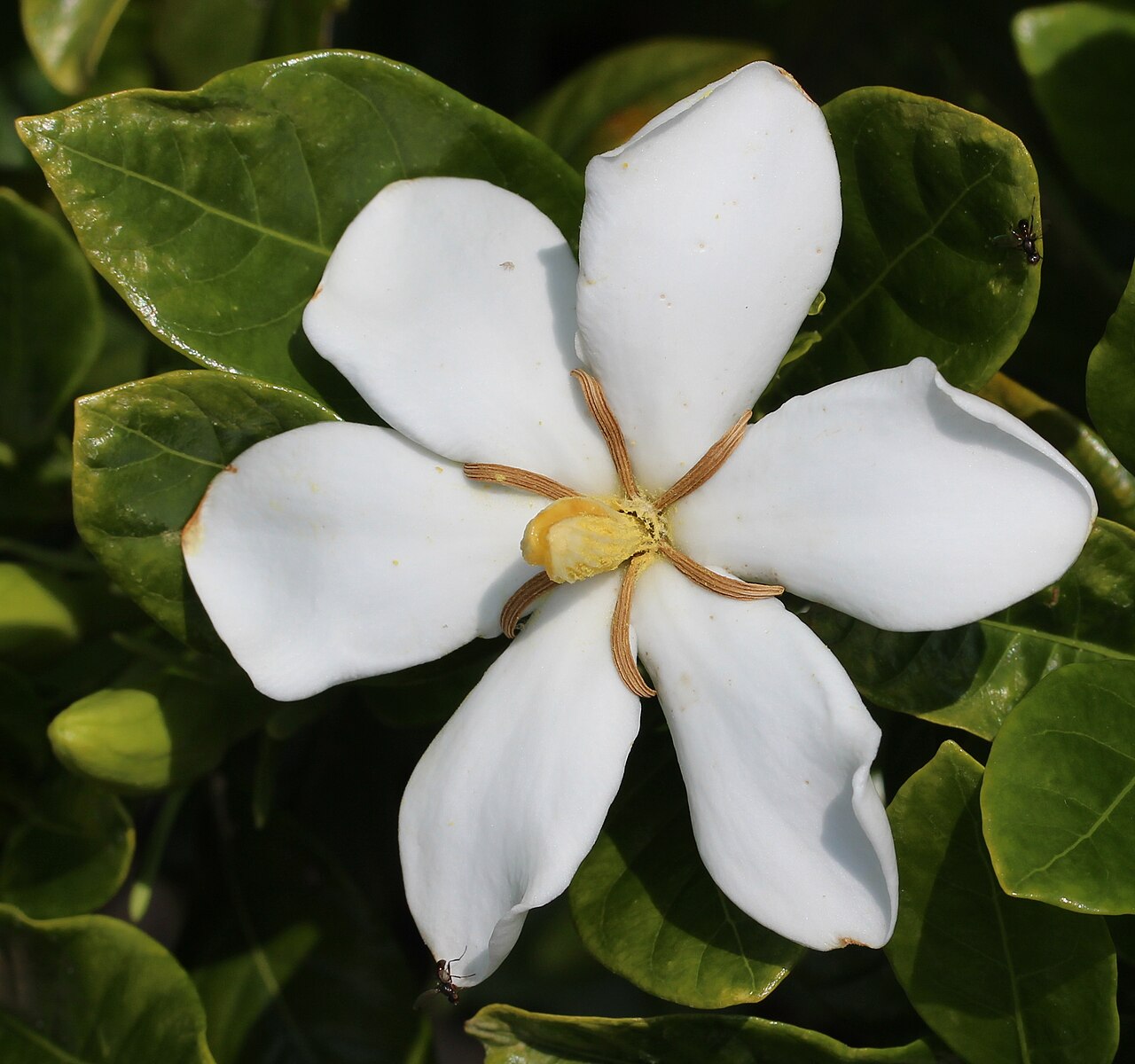
The species is a dense evergreen shrub with glossy dark leaves and strongly fragrant waxy white flowers. Kew recognizes Gardenia jasminoides as the accepted identity.
Why this plant is a concern
ASPCA's exact-species record supports toxic classifications for both cats and dogs and lists geniposide and gardenoside among the toxic principles. The symptom wording here stays within that source.
Severity depends on the animal, amount, plant part, and circumstances. A page cannot diagnose an individual exposure, and a mild source description is not a promise that every case will remain mild.
If your pet chewed it
Remove the plant, collect a sample or clear photo for identification, and note when and how much may have been eaten. Contact a veterinarian or animal poison-control service for case-specific guidance.
Seek prompt care for repeated vomiting or diarrhea, hives, facial swelling, breathing difficulty, marked weakness, or any rapid change. Do not wait for a complete symptom list before asking for help.
How to recognize Cape Jasmine
Gardenia jasminoides has opposite or whorled glossy leaves and spiral-looking buds that open into fragrant white to cream flowers. The flowers may be single or double depending on cultivar.
Scientific labeling is useful because Cape jasmine and gardenia are common names, while unrelated plants may also be sold with jasmine in their names.
Care and placement
NC State Extension recommends bright indirect light or partial shade, moist but well-drained acidic soil, and shelter from cold or strong wind. Root disturbance and alkaline conditions can stress the plant.
Gardenias are often sold as florist plants but can mature into shrubs several feet tall. Keep flowers, fallen leaves, pruning waste, fertilizer, and pest treatments inaccessible to pets.
Evidence and sources
- Royal Botanic Gardens, Kew — Plants of the World Online — Gardenia jasminoides J.EllisKew marks Gardenia jasminoides as an accepted species.
- ASPCA Animal Poison Control — Cape JasmineExact-species ASPCA record; toxic principles are listed as genioposide and gardenoside and clinical signs as mild vomiting and/or diarrhea and hives.
- NC State Extension — Gardenia jasminoidesInstitutional horticultural source used for the care and approved discovery-trait statements.