
Plant safety record
Bloodleaf
Iresine diffusa f. herbstii
ASPCA lists Iresine herbstii as non-toxic to cats and dogs, and Kew validates that name as a synonym of the accepted Iresine diffusa f. herbstii used by PawPlants.
Cats
NON-TOXIC
ASPCA classifies Iresine herbstii as non-toxic to cats; Kew validates it as a synonym of Iresine diffusa f. herbstii.
Dogs
NON-TOXIC
ASPCA classifies Iresine herbstii as non-toxic to dogs; Kew validates it as a synonym of Iresine diffusa f. herbstii.
Quick answer
A small chew from correctly identified bloodleaf is not expected to cause characteristic plant poisoning. Remove access and monitor for persistent digestive signs.
Contact a veterinarian if symptoms persist, a large amount was eaten, or identification is uncertain.
Plant identity
This record uses the accepted name Iresine diffusa f. herbstii. Iresine herbstii is retained as a validated scientific synonym, while Joseph's Coat is excluded as a broad common alias.
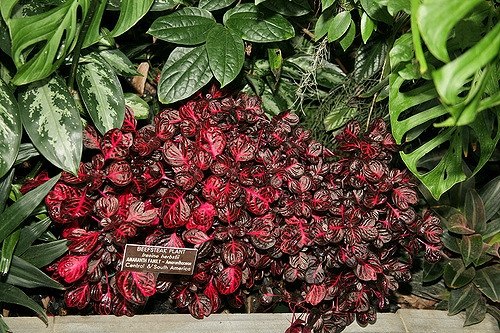
Bloodleaf is a short-lived evergreen perennial grown for oval reddish-purple leaves with lighter veins. Kew establishes the accepted form-level identity and synonym bridge.
What non-toxic means
The ASPCA evidence uses Iresine herbstii. The PawPlants conclusion transfers only because Kew independently validates that name as a synonym of Iresine diffusa f. herbstii.
Non-toxic is not a promise that eating foliage cannot cause mild stomach upset in an individual pet.
If your pet chewed it
Remove plant material and prevent more chewing. Do not induce vomiting or give a home remedy unless a veterinary professional directs it.
Monitor for persistent vomiting, diarrhea, coughing, or unusual behavior and seek veterinary advice if signs continue.
How to recognize Bloodleaf
Bloodleaf has red stems and opposite, oval leaves patterned in red, burgundy, pink, or green. The foliage, not the insignificant flowers, is its main ornamental feature.
Scientific labeling is important because Joseph's Coat is shared by unrelated plants.
Care and placement
NC State Extension recommends full sun and evenly moist but well-drained soil. Reduce watering in cooler seasons and propagate readily from stem cuttings.
Pinching keeps a houseplant bushy and under about three feet. The retained dimensions are roughly one to one-and-a-half feet in the NC State profile.
Evidence and sources
- Royal Botanic Gardens, Kew — Plants of the World Online — Iresine diffusa f. herbstiiKew marks Iresine diffusa f. herbstii as an accepted taxon at the rank of form.
- Royal Botanic Gardens, Kew — Plants of the World Online — Iresine herbstiiKew taxon 320760-2 treats Iresine herbstii as a synonym of the accepted Iresine diffusa f. herbstii.
- ASPCA Animal Poison Control — BloodleafASPCA non-toxicity evidence is transferred only through the retained Kew synonym bridge. Broad Joseph's Coat terminology and other source names are not candidate search aliases.
- NC State Extension — Iresine diffusa f. herbstiiInstitutional horticultural source used for the care and approved discovery-trait statements.