
Plant safety record
Bird of Paradise
Strelitzia reginae
Strelitzia reginae, the familiar orange-and-blue bird of paradise flower, is toxic to cats and dogs but usually causes mild nausea, vomiting, or drowsiness. The common name also belongs to more toxic Caesalpinia plants, so identification matters.

Cats
TOXIC
Strelitzia fruit and seeds may cause nausea, vomiting, or drowsiness. A different plant sharing the name bird of paradise can cause stronger mouth and digestive irritation.
Dogs
TOXIC
Strelitzia fruit and seeds may cause mild nausea, vomiting, or drowsiness. Confirm the plant because Caesalpinia bird of paradise is more toxic.
Quick answer
If the plant is confirmed as Strelitzia reginae and your pet chewed it, remove access and watch for nausea, vomiting, or unusual sleepiness. Fruit and seeds are the main concern.
Call your veterinarian for repeated vomiting, marked drowsiness, difficulty swallowing, poor coordination, or any exposure involving an uncertain bird of paradise identity.
Plant identity
Strelitzia reginae — confirm the identity
Why identification changes the answer
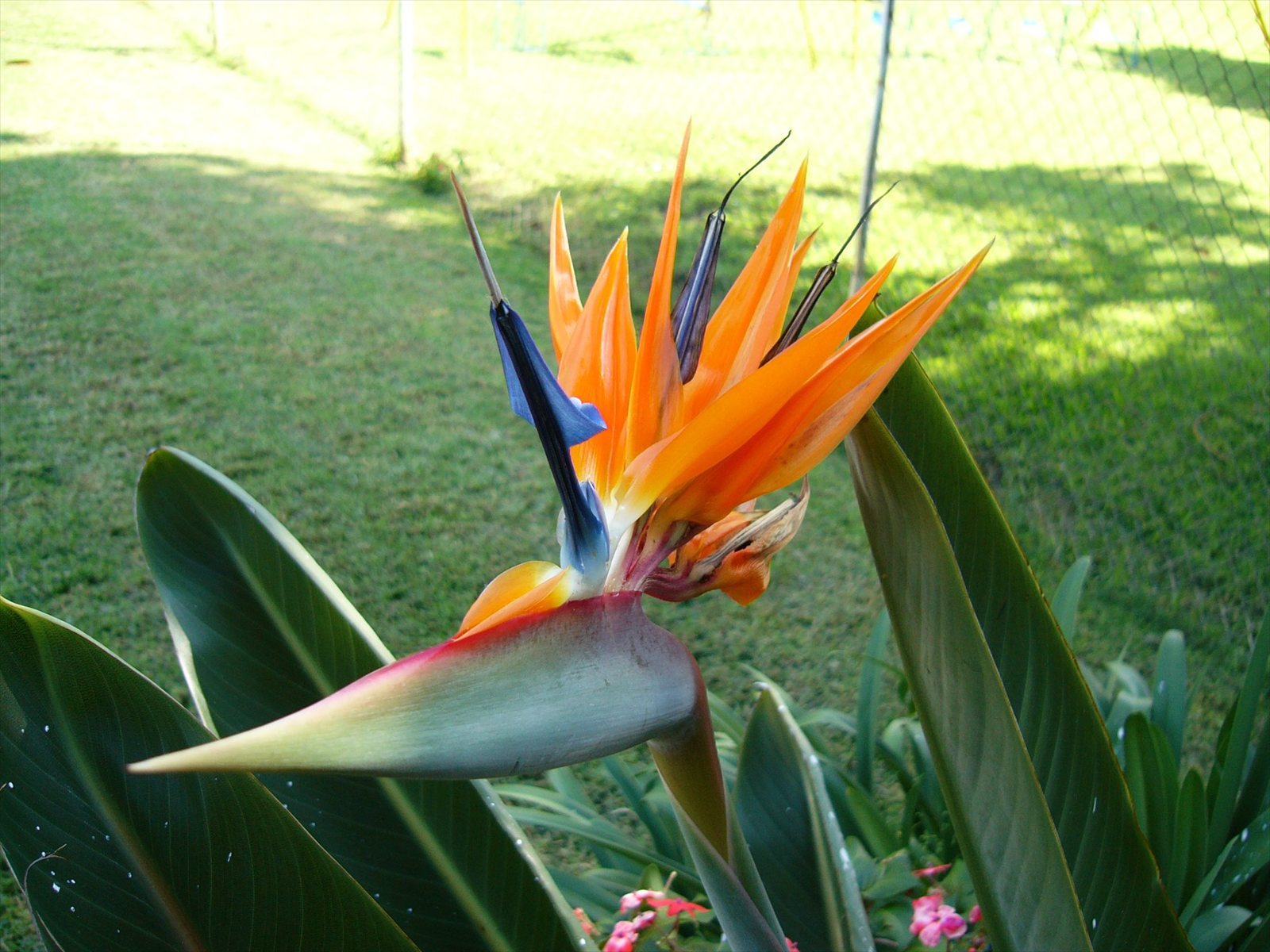
Bird of paradise may mean Strelitzia reginae, a large-leaved plant with an orange-and-blue flower that resembles a bird’s head.
The same common name is also used for Caesalpinia or Poinciana gilliesii, a shrub with finely divided leaves and yellow flowers with long red stamens. ASPCA describes that plant as more toxic.
Expected signs from Strelitzia
Mild nausea, vomiting, and drowsiness are the listed effects, caused mainly by fruit and seeds.
The exact amount eaten may be unclear. Save photographs and report whether fruit, seeds, flowers, leaves, or an unknown part was involved.
Signs that deserve faster help
Intense mouth burning, heavy drooling, swallowing difficulty, diarrhea, or poor coordination may fit the more toxic Caesalpinia-type plant or another exposure.
Trouble breathing, collapse, seizures, or inability to stand normally requires emergency veterinary care regardless of plant identity.
What to do right now
Remove loose plant material and prevent further chewing. Do not make your pet vomit or give a home remedy unless a veterinary professional directs you.
Take photos of the whole plant, leaf structure, flowers, fruit or seed pods, and label. Contact your veterinarian or animal poison control when the identity or amount is uncertain.
How to recognize Strelitzia reginae
Strelitzia has large, broad, banana-like leaves on long upright stalks. The distinctive flower has a firm boat-shaped bract with orange and blue petals emerging above it.
Indoor plants may not flower, so the broad paddle-shaped leaves and growth habit still matter.
How the shrub form differs
Caesalpinia gilliesii is a woody shrub with many small leaflets that give the foliage a feathery appearance. Its yellow flowers have conspicuously long red stamens.
That shape is very different from the broad leaves of Strelitzia. Do not apply the milder Strelitzia guidance to a feathery-leaved shrub.
Preventing another exposure
Keep fallen flowers, fruit, seeds, and seed pods picked up. Outdoor pets may find dropped material before anyone notices it.
Where the common name is uncertain, retain the nursery label or add a weather-resistant label with the scientific name.
Evidence and sources
- ASPCA — Bird of Paradise FlowerStrelitzia reginae is toxic to cats and dogs; fruit and seeds mainly cause mild nausea, vomiting, and drowsiness.
- ASPCA — Bird of ParadiseCaesalpinia gilliesii also uses the common name bird of paradise and is more toxic, with oral burning, drooling, vomiting, diarrhea, swallowing difficulty, and possible incoordination.